Launching SARA: A New Network for Small-Town and Rural Arts in Virginia
Randolph College’s MFA in Arts Leadership, in collaboration with Small Town Big Arts, launches the Small-Town Arts and Rural Arts Network (SARA) pilot in Virginia's Region 8, bringing practical strategies and sustained support to communities with limited arts infrastructure. A six-month program designed for learning through doing.
How to Use This Article:
Share this with arts leaders, community development professionals, local government officials, and grassroots organizers in rural communities who need to understand what's possible for arts activation without traditional infrastructure. Use it when recruiting workshop participants, explaining to stakeholders why arts-based strategies strengthen civic engagement, building the case for creative partnerships with existing community institutions, or demonstrating to funders how capacity-building programs can reach underserved communities that fall outside conventional arts funding models.
I'm excited to share that the Randolph College MFA in Arts Leadership program has been awarded a grant from the Virginia Commission for the Arts to lead a six-month pilot program that's been in the works for some time now. The Small-Town Arts and Rural Arts Network (SARA) represents an approach I've wanted to test for years: what happens when we meet rural communities where they are, with practical tools designed for their actual constraints?
This isn't about importing urban arts infrastructure models to places that don't want or need them. It's about codifying what already works in small towns and making those strategies accessible to communities that haven't had support to activate their creative potential.
Why Region 8, Why Now
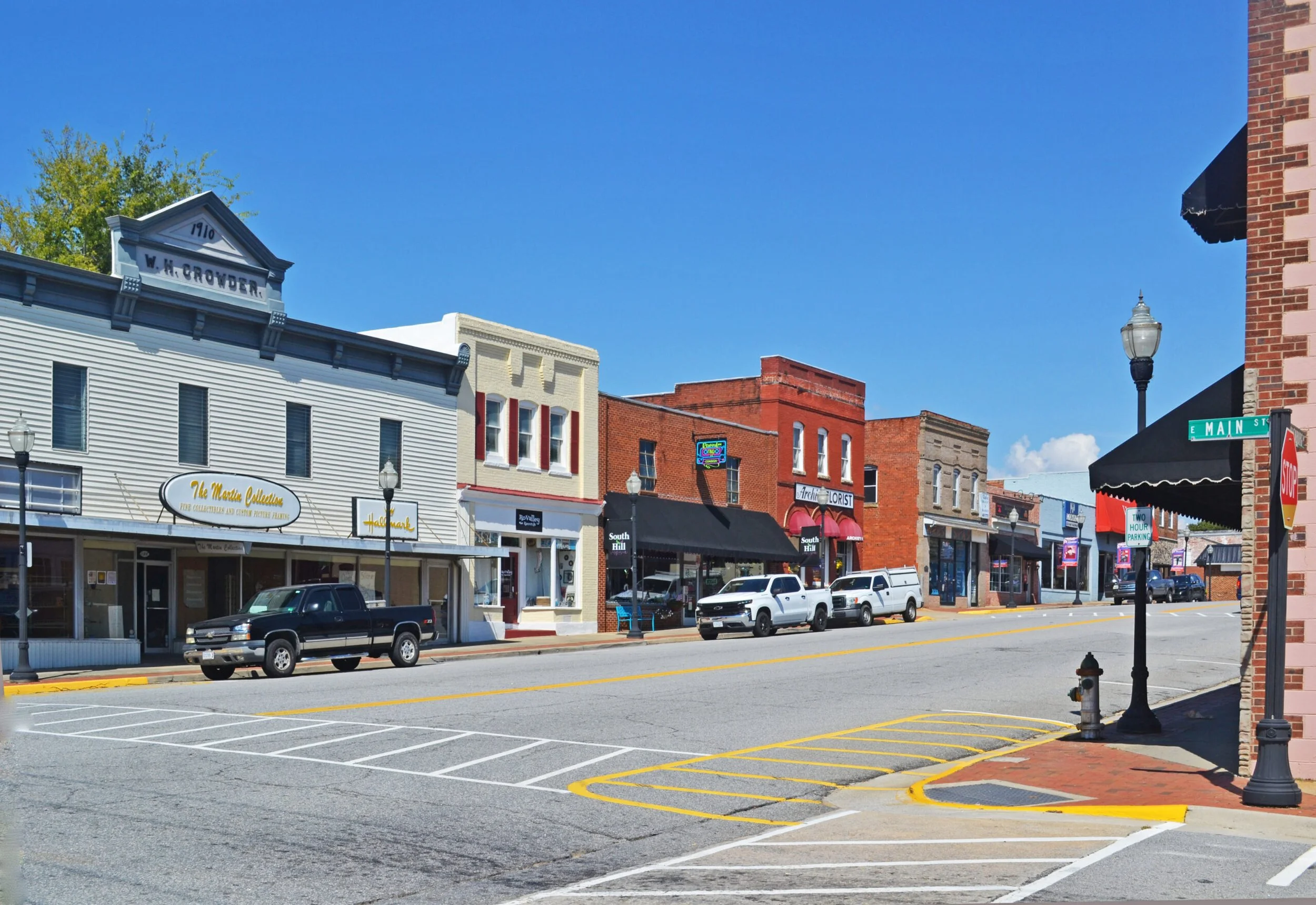
We're starting in Virginia's Region 8, specifically Halifax, Mecklenburg, and Charlotte counties, because this is precisely where the need is greatest. These are counties with minimal VCA grantee presence, places where traditional arts funding hasn't reached. But here's what I've learned over two decades of working in small communities: the absence of traditional infrastructure doesn't mean an absence of creative capacity or community hunger for cultural engagement.
The pilot deliberately targets a jurisdiction with few current VCA grantees. We're testing whether we can effectively reach and support communities that have been largely outside the formal arts funding ecosystem. I also think this is an opportunity to orient the VCA to the realities and existing arts that exist in these communities.
What Makes SARA Different
The program has three core components that work together:
In-Person Workshop Circuit: We're running three half-day workshops across Region 8. The first workshop, happening March 24th at the Colonial Theater in South Hill, will be facilitated by Ash Hanson and Vivian M. Cook from the Department of Public Transformation, our national partner organization. DoPT brings deep expertise in rural creative community development; they've been doing this work at scale across the country.
Each workshop is structured around a simple premise: participants will leave with an implementable project plan. Not inspiration. Not theory. An actual plan with partners identified, timelines mapped, and next steps clear.
Regional Practice Hub: We're launching a digital resource center on SmallTownBigArts.com that will house workshop materials, practice cards, resource briefs, and action-plan templates. This isn't just a repository, it's a working space where practitioners can share progress, ask questions, and learn from each other's early wins and obstacles. I will be speaking with Meg Greene from the Rural Texas Arts and Culture Network in next week’s podcast about their online hub.
Sustained Follow-Through: Here's where most capacity, building programs fall short, they deliver workshops and disappear. We're building in 30-day check-ins, monthly virtual office hours, and two follow-up virtual workshops led by Small Town Big Arts. The goal is to help participants navigate real obstacles as they implement their plans.
Learning Through Doing
The workshop topics reflect strategies that actually work in resource-constrained environments:
Organizing without a building (pop-up programming, mobile delivery)
Partnership models with libraries, YMCAs, and community centers
Volunteer-driven governance
Micro earned-revenue approaches
Narrative change and community storytelling
These aren't theoretical frameworks. They're adapted from documented practices in successful small-town arts initiatives across the country.
The March 24th workshop in South Hill will explore arts-based organizing, partnership-building, and civic engagement. Participants will examine how creative strategies can build trust, strengthen civic participation, and expand locally-led decision-making. We'll look at concrete examples from DoPT's Engage Rural, Activate Rural, and YES! House programs—projects that demonstrate how artists and creative entrepreneurs activate third spaces and build possibility.
Building Toward Statewide Scale
This pilot is designed to generate data and insights that will inform statewide expansion. We're tracking participation by locality and previous VCA funding status. We're monitoring project commitments and follow-through. We're documenting what works, what doesn't, and why.
Virginia Tech is part of this learning process. Faculty and students from their Arts Leadership and Urban Planning programs will receive training from DoPT, preparing them to collaborate on the network's expansion. This cross-institutional approach means we're not just delivering a program, we're building regional capacity to support rural cultural development over the long term.
Why This Matters
I spent over a decade running the Academy Center of the Arts in Lynchburg that felt all the challenges of sustaining cultural infrastructure outside major metros. I've seen how thin the margin is between thriving and struggling, how vulnerable these institutions become when communities don’t understand the financial realities of combined earned and contributed income, or when boards make decisions without fully grasping the operational implications.
The SARA pilot is about preventing those crises. It's about equipping community leaders with the knowledge and tools they need to build sustainable cultural programs from the beginning. It's about demonstrating that you don't need a multimillion-dollar facility to activate meaningful arts engagement; you need the right partnerships, clear strategy, and community trust.
This is also about changing the narrative around rural arts. These aren't communities that need to be saved or fixed. They're communities with creative assets and strong social fabric. They need practical support, peer networks, and validation that their scale isn't a deficit, it's an advantage when you build systems designed for that scale.
Getting Involved
The March 24th workshop is open to community leaders, artists, and culture workers in Region 8. We're especially interested in hearing from people who are already thinking about arts-based strategies but aren't sure how to move forward—or who've tried things informally and want to understand how to make them more sustainable.
Registration is straightforward. We're asking participants to share a bit about their connection to arts and community leadership, what excites them about the workshop, and what local challenges might benefit from arts-based engagement strategies.
The Practice Hub will launch in early spring, providing resources not just for workshop participants but for any Virginia community interested in small-town arts development models.
What Success Looks Like
In six months, we'll deliver a wrap memo to VCA summarizing reach, outcomes, and recommendations for statewide expansion. But success isn't just about numbers and deliverables.
Success is changing the conversation about what's possible in rural Virginia, and building the infrastructure, not necessarily of buildings, but of knowledge and networks, to make it sustainable.
This pilot is just the beginning. But if we get it right, SARA could become a model for how state arts agencies support communities that have been chronically underserved by traditional funding mechanisms. That's worth getting right.
Part One: The Washington National Opera Departure
The Washington National Opera's departure from the Kennedy Center after 54 years offers a master class in how misunderstanding resident partnerships can destabilize an entire institution. Richard Grenell's dismissal of the opera as "not financially smart" reveals a fundamental ignorance about how performing arts venues actually achieve financial sustainability—through the patient, unglamorous work of audience cultivation that resident companies provide. This analysis examines why resident organizations matter, how they create stability in volatile industries, and what smaller arts organizations can learn from the Kennedy Center's costly mistake.
How to Use This Article:
Share this with venue directors, arts center boards, community leaders, and potential resident company partners who need to understand the economic and audience development value of these relationships. Use it when advocating for resident company partnerships, educating boards about sustainable venue models, defending existing residency agreements, or explaining to local government why hosting third-party cultural organizations creates long-term community value beyond simple rental income.
I'm continuing to examine the Kennedy Center's troubles as a way to improve nonprofit arts literacy in smaller communities. Today I want to focus specifically on resident companies and why they matter.
I ran an arts center in a city of 80,000 for over a decade. We had multiple resident companies, and they were critical to both our financial model and our relationship with audiences. In smaller communities, a single arts center or performance venue often serves as the only cultural infrastructure for a large geographical region. The ability to host local third-party cultural organizations can create long-term stability by connecting and cultivating audiences across an entire area.
The value of resident companies extends far beyond simple venue rental or programming fill. These organizations do the patient, unglamorous work of audience cultivation that host venues often have strained capacity to manage alone. A resident opera company doesn't just bring productions, it brings subscribers who attend multiple times per season, donors who feel ownership of the work, education programs that introduce new audiences to the art form, and community relationships built over years or decades. The host venue benefits from this cultivation without bearing the full cost or risk of building those relationships from scratch. When audiences develop loyalty to a resident company, they also develop familiarity and comfort with the venue itself, creating pathways for them to attend other programming. The resident company becomes an audience development engine that serves the entire facility's mission, not just its own programming slots.
When one of the Kennedy Center's long-standing resident companies departs after 54 years, we should all take note. The Kennedy Center and its current leadership continue to teach us how not to run a cultural facility, regardless of community size.
The Economics of Resident Organizations: Trading Volatility for Stability
The Washington National Opera's decision to leave the Kennedy Center represents more than an institutional divorce, it's a leadership failure that reveals fundamental misunderstandings about how performing arts venues actually work.
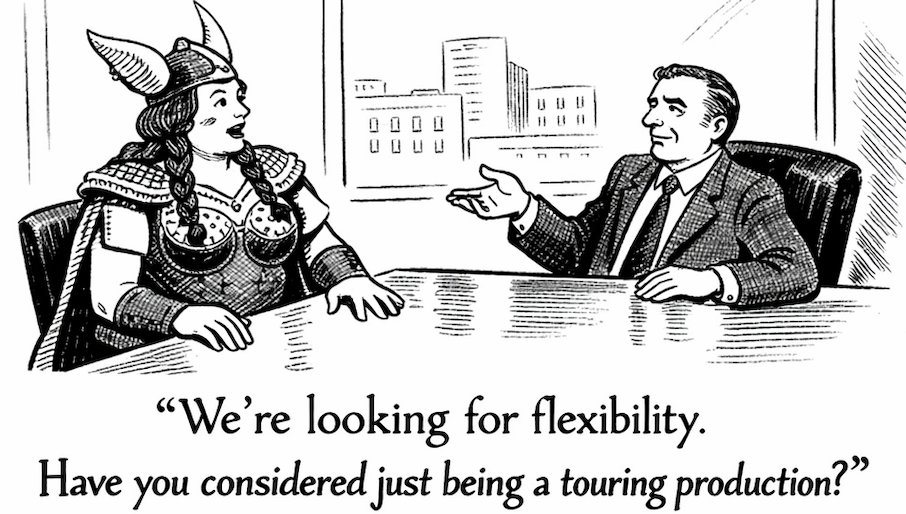
A Richard Grenell deleted social media post claimed that "having an exclusive Opera was just not financially smart" and that bringing in touring operas would offer flexibility. This fundamentally misunderstands how resident arts organizations function within host institutions. This isn't just wrong, it's backwards.
Resident organizations like the Washington National Opera provide predictable, stable revenue streams in an inherently volatile industry. A third-party organization focused on building and serving its own audience base takes significant financial and operational risk off the host institution's shoulders. The opera company cultivates relationships with donors, builds subscription audiences, manages production costs, and develops programming expertise, all specialized work that requires sustained institutional memory and community trust.
Touring productions, by contrast, represent speculation. You're betting that audiences will show up for companies and productions they have no relationship with, marketed by an institution that has systematically alienated much of its core constituency. Without the groundwork of cultivating a DC-based opera-going audience—the season ticket holders, the donor base, the education programs, the community relationships, you're essentially running a series of one-night stands and hoping each one succeeds.
The Washington National Opera wasn't "exclusive" in the sense Grenell implies—it was a strategic partner managing audience development and financial risk. The affiliation agreement signed in 2011 came specifically because the opera was facing financial challenges. The Kennedy Center provided infrastructure and the opera provided specialized programming expertise and its own revenue generation. This is how cultural institutions create sustainable models.
Now the Kennedy Center is assuming all that risk themselves, with a smaller staff, a politicized brand, alienated donors, and boycotting artists. They'll need to:
• Negotiate individual contracts with touring companies
• Market each production independently without the benefit of subscription sales
• Build audiences for companies with no local presence or relationship
• Compete with other venues for touring productions
• Cover costs upfront without the opera's donor base
This is "flexibility" only in the sense that being unemployed is "flexible." You have more options, but less security and fewer resources to pursue them.
The Absence of Vision: Where's the Audience Strategy?
Perhaps most damning is what we don't hear from Grenell: any coherent strategy for building audiences in an extraordinarily challenging environment.
The electoral math in Washington DC is stark. Donald Trump won 6.47% of the city's vote. While tourism provides a more diverse potential audience base, the Kennedy Center's aggressive politicization, the name change, the explicit "NO MORE DRAG SHOWS, OR OTHER ANTI-AMERICAN PROPAGANDA" messaging, the national anthem requirements, the hiring of culture war warriors, has made the institution itself a political statement.
Where's the audience development plan? How does Grenell intend to:
• Rebuild donor relationships after a well-documented collapse in contributions?
• Attract artists when high-profile names are publicly canceling commitments?
• Sell tickets when the institution's brand has become politically charged?
• Maintain tourism appeal when the building itself has become controversial?
• Cultivate local audiences in a city where 93.53% of voters rejected the president whose name now appears on the building?
These aren't rhetorical questions—they're the fundamental strategic challenges facing the institution. And we've heard nothing from Grenell suggesting he's even thinking about them, let alone has plans to address them.
Instead, we get "our patrons clearly wanted a refresh,” a claim made without evidence about patrons who are, by all accounts, fleeing the institution.