SARA Network Seeks Virginia Regional Captains
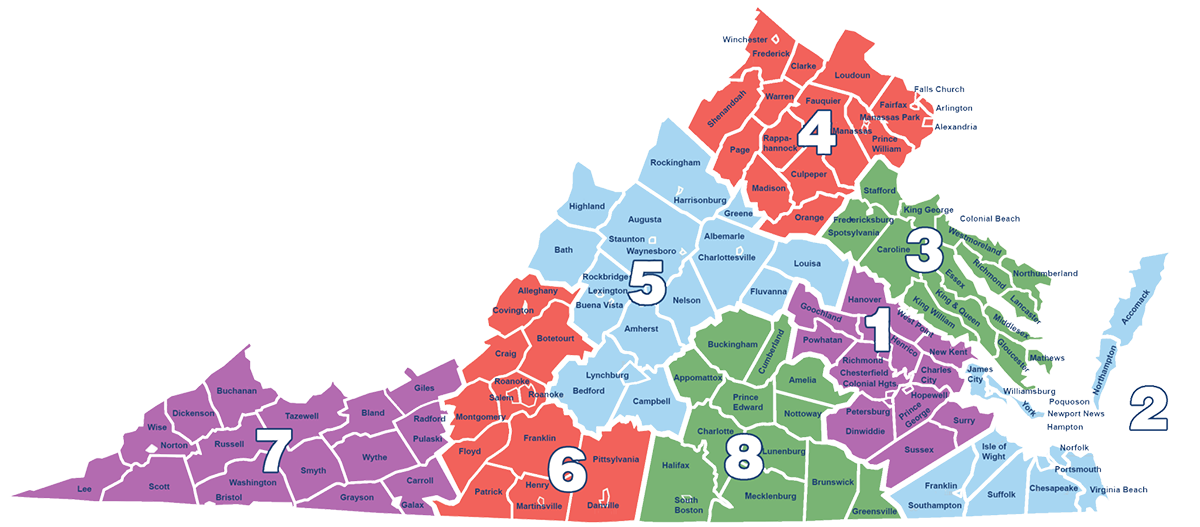
We are incorporating a statewide component -- a Region Captain structure – which will help us find, welcome, and support the small and rural arts organizations in each of the VCA’s 8 regions. He has asked our help with identifying prospects from each of the eight VCA regions.
We are excited to share that Year Two of SARA will launch this fall in VCA Regions 1 and 3! SARA (Small Town and Rural Arts) is a new initiative serving the unique needs of Virginia’s rural and micropolitan areas, connecting arts organizations and artists for the purpose of peer exchange, information sharing, and best practices toolkit. The VCA provided a special grant to Small Town/Big Arts, who already had a remarkable footprint with small and rural nonprofits, to pilot a program in Region 6 during the second half of FY26.
https://www.smalltownbigarts.com/about-sara
Building on the successes and lessons learned from the pilot, Geoff Kershner with Small Town/Big Arts is expanding the format. While SARA will concentrate efforts to serve small and rural arts organizations and artists in Regions 1 and 3 in FY27, Geoff is also incorporating a statewide component -- a Region Captain structure – which will help him find, welcome, and support the small and rural arts organizations in each of the VCA’s 8 regions. SARA is asking for help with identifying prospects from each of the eight VCA regions. They don't have to be affiliated with an arts org; they could be a civic leader, someone involved in tourism, or a foundation leader. As part of the SARA special VCA grant, he will be providing a $1,000 stipend for a two-year commitment.
In Geoff’s words, the role isn't a formal leadership title so much as a particular kind of person, what Malcolm Gladwell calls a "connector." Someone whose relationships span an unusually wide and diverse set of circles, and who genuinely enjoys linking people together. In practice, that means someone who knows the region's arts organization leaders, but also the librarian, the extension agent, the farmers market folks, a local business owner or two, maybe an elected official, and who moves between those worlds easily because they're curious about all of them.
Below is a descriptor of what he is looking for. I have asked the staff to also noodle. If anyone comes to mind, please email @gkershner@smalltownbigarts.com
SARA Region Captain — What We're Looking For
We're looking for a "connector": someone deeply rooted in their community with relationships that cross multiple circles — arts and culture, but also local government, education, business, and civic life.
· Knows the region's arts organization(s) well, but also knows the librarian, the extension agent, local business owners, and civic leaders
· Is trusted across multiple community circles, not just one
· Naturally connects people to each other and to opportunities, often without being asked
· Brings more curiosity than ego; a good listener, not necessarily the most visible person in the room
Does this need to be someone currently working at an arts organization? No — board members, volunteers, retired arts staff, or well-connected community members all qualify. What matters is a genuine tie to the local arts organization and trust across the wider community, not a current job title.
The Arts Are a Team Sport: Inside the Fine Arts Center for the New River Valley's Artrepreneur Program
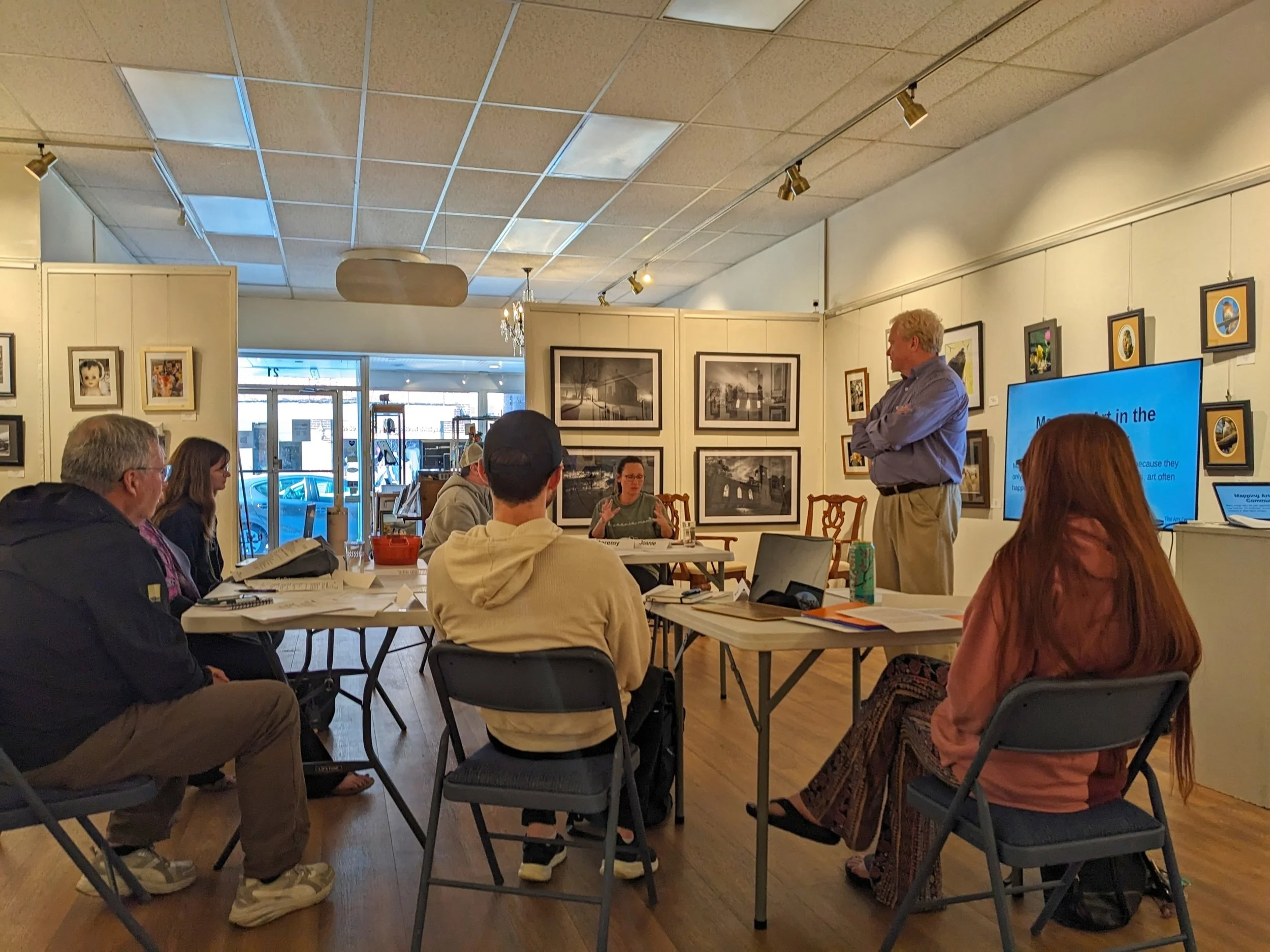
There's a gap most arts organizations can identify but fewer have tried to close; the distance between making art and making a living from it. Brandon Phillips, John Ross, and Katie Shepard from the Fine Arts Center for the New River Valley share about their Artrepreneur Program: an eight-week cohort-based initiative serving artists in Pulaski and Blacksburg, Virginia. If you're leading a small arts organization and wondering whether something like this could work in your community, this one's for you.
There's a gap that most arts organizations can identify but fewer have actually tried to close. It's the distance between making art and making a living from art — between creative skill and the business fluency required to sustain a practice. For artists working in smaller communities, that gap can feel especially wide, not just because resources are limited, but because there often isn't anyone around who's navigated it before.
The Fine Arts Center for the New River Valley (FACNRV), based in Pulaski, Virginia, has been serving the arts in its community for 48 years. Recently, I had the chance to sit down with Executive Director Brandon Phillips, Board President John Ross, and Blacksburg Gallery Director Katie Shepard to talk about a new initiative they've launched to address exactly this problem: the Artrepreneur Program.
What I heard was a model worth paying attention to — not just for what it teaches, but for how it was built, who it serves, and the unexpected partnerships that are making it possible.
Starting With the Artists
One of the things that struck me most about this program is that it didn't begin with a curriculum. It began with a question: what do you actually need?
John Ross, whose background is in instructional design, applied that lens directly to program development. Before a single session was planned, the team conducted surveys and interviews with artists across their network, asking them to rate potential topics on a scale of 1 to 10 and identify what was missing from existing programs. The answer that came back most clearly wasn't a skill set — it was community.
"The community was the number one thing they wanted," John told me.
That finding shaped everything that followed. Yes, the program covers the practical business skills artists consistently said they lacked — pricing their work, building a digital presence, writing grant applications, developing a business plan, understanding bookkeeping. But the cohort model, and the ongoing connection it creates, is the point. The eight weeks of structured sessions are the beginning of something, not the end.
What Eight Weeks Actually Looks Like
The curriculum is sequenced deliberately. Week one focuses on artist identity — participants develop an artist statement and start finding language for their work. Week two moves outward into the community, with artists going out to identify places where their work might live and build relationships beyond the studio. By the end of the program, participants will write proposals for those placements, drawing on the documentation and writing skills they've developed along the way.
In between, the sessions cover the full landscape of what it means to operate as a working artist: digital presence, financial literacy, show logistics, business planning. The sessions are hands-on. Katie Shepard, who runs her own arts business and directs the Blacksburg Gallery, described facilitating a session on art shows by setting up her own display inside the Fine Arts Center's big tent — and then having every participant do the same from scratch. Tables and chairs, pseudo-art made from dishes and tablecloths, working through real decisions about layout and presentation.
The program also brings in experts from outside the arts world, including facilitators from the Small Business Development Council in Roanoke, who add a layer of practical business expertise the arts center couldn't provide on its own. That outside perspective, John noted, has made the sessions feel real in a way that purely arts-focused training often doesn't.
And when things come up that there wasn't time to cover? The team is already adapting — recording short screen-capture videos on topics like framing and matting, sending them out as supplemental resources to keep participants moving forward between sessions.
The Partnership No One Expected
Here's the piece of this story that I think deserves the most attention from anyone running a small arts organization: the economic development connection.
When FACNRV began developing this program, John took it to Pulaski's economic developer, reasoning that artist business training is, at its core, an economic development project. That conversation led to Lydia Crockett, director of Small Business Solutions for Pulaski County. She saw the program immediately — not as an arts initiative but as a small business development initiative serving a population she didn't normally reach. She provided a small startup grant to cover planning, logistics, and materials. She connected them with the Small Business Development Council in Roanoke, which brought in instructors and resources. And she helped design a significant incentive built into the program's final week.
Artists in the cohort pay a modest tuition — $10 per week, $80 total. But Pulaski County residents who complete a business plan in the final week qualify for a $1,500 small business grant. The business plan session is taught by a representative from the Small Business Development Council, and participants receive free one-on-one follow-up time to complete it.
This is what cross-sector collaboration looks like when it actually works. The economic development community, as John pointed out, also understands something that arts funders often don't: you need to be able to pay people to run things. Many arts grants fund projects but leave organizations unable to cover the staff time required to execute them. Economic development funding, in his experience, accounts for indirect and overhead costs in ways that make programs actually sustainable.
The Community Underneath the Curriculum
Katie Shepard offered what I thought was the most precise framing of why the cohort model matters: "We have this idea in our mind that the arts are a solo sport, but they're really a team sport."
She was speaking from experience. When she started her own arts business, she described feeling completely lost — not knowing which shows to pursue, how to price her work, where to even begin. The isolation wasn't just a rural phenomenon; it's what happens when artists leave educational environments where critique, feedback, and peer connection are built in, and suddenly find themselves working alone.
The Artrepreneur cohort changes that. When participants don't know something, they have a group to spread the research across. When someone's underpricing their work, they have peers who will say so plainly — with the credibility of people who are actually in the same field. When they feel like they can't negotiate better vendor pricing on their own, they have a collective that can.
Katie gestured toward an even bigger possibility: an artisan's guild that could advocate collectively for artists across the region — negotiating show fees, setting standards, making the arts a more economically viable career path in communities where it currently isn't. That's a long-term vision, not a program outcome. But the Artrepreneur cohort is the kind of structure that makes it possible to imagine.
What Pulaski Needed
It's worth pausing on what the Fine Arts Center has meant to Pulaski specifically, because it gives the Artrepreneur Program context it wouldn't otherwise have.
FACNRV has operated in downtown Pulaski for 48 years — at this point, John noted, they're the longest-running business downtown. Several years ago, the area underwent extensive infrastructure work: roads torn up, pipes replaced, sidewalks gone for years. Foot traffic collapsed. Visitors stopped coming. Through all of it, the Fine Arts Center kept going — free kids' classes held wherever there was parking, free concerts, ongoing support for artists even when the center couldn't operate normally.
That history is part of why artists responded so readily to the Artrepreneur Program when it launched. The organization had demonstrated its commitment to the community over time, and the community had seen what happens when it loses that anchor. The program isn't starting from zero — it's building on nearly five decades of relationship.
A Model Worth Replicating
When I asked each of the three guests what they would say to a small arts organization thinking about doing something similar, the answers were consistent and practical.
John's: It doesn't matter what size you are, you can do this. The program took three years to develop and launch — it was a long-term strategic priority, not a sudden initiative. And the economic development partnerships that made it financially viable are available, in some form, in most communities. Many of those services are free or publicly funded. Most arts organizations just haven't thought to knock on that door.
Katie's: Tailor it to your community. The framework is transferable; the content has to be local. Artists can tell the difference between a program designed for them and a generic business curriculum that's been repackaged. Start with the people in your specific community, find out what they actually need, and build from there. That process of co-design also builds the excitement that gets people to show up.
Brandon's: Dream big, and don't be afraid to adapt. No program survives first contact with its participants unchanged. The willingness to respond to feedback — to make supplemental videos, to adjust session length, to add topics that weren't in the original plan — is what separates programs that grow from programs that stagnate.
The Artrepreneur Program is currently underway at the Fine Arts Center for the New River Valley, serving its first cohort of artists in Pulaski and Blacksburg. More information is available at facnrv.org, and the team welcomes questions from other organizations interested in replicating the model at info@facnrv.org.
Launching SARA: A New Network for Small-Town and Rural Arts in Virginia
Randolph College’s MFA in Arts Leadership, in collaboration with Small Town Big Arts, launches the Small-Town Arts and Rural Arts Network (SARA) pilot in Virginia's Region 8, bringing practical strategies and sustained support to communities with limited arts infrastructure. A six-month program designed for learning through doing.
How to Use This Article:
Share this with arts leaders, community development professionals, local government officials, and grassroots organizers in rural communities who need to understand what's possible for arts activation without traditional infrastructure. Use it when recruiting workshop participants, explaining to stakeholders why arts-based strategies strengthen civic engagement, building the case for creative partnerships with existing community institutions, or demonstrating to funders how capacity-building programs can reach underserved communities that fall outside conventional arts funding models.
I'm excited to share that the Randolph College MFA in Arts Leadership program has been awarded a grant from the Virginia Commission for the Arts to lead a six-month pilot program that's been in the works for some time now. The Small-Town Arts and Rural Arts Network (SARA) represents an approach I've wanted to test for years: what happens when we meet rural communities where they are, with practical tools designed for their actual constraints?
This isn't about importing urban arts infrastructure models to places that don't want or need them. It's about codifying what already works in small towns and making those strategies accessible to communities that haven't had support to activate their creative potential.
Why Region 8, Why Now
We're starting in Virginia's Region 8, specifically Halifax, Mecklenburg, and Charlotte counties, because this is precisely where the need is greatest. These are counties with minimal VCA grantee presence, places where traditional arts funding hasn't reached. But here's what I've learned over two decades of working in small communities: the absence of traditional infrastructure doesn't mean an absence of creative capacity or community hunger for cultural engagement.
The pilot deliberately targets a jurisdiction with few current VCA grantees. We're testing whether we can effectively reach and support communities that have been largely outside the formal arts funding ecosystem. I also think this is an opportunity to orient the VCA to the realities and existing arts that exist in these communities.
What Makes SARA Different
The program has three core components that work together:
In-Person Workshop Circuit: We're running three half-day workshops across Region 8. The first workshop, happening March 24th at the Colonial Theater in South Hill, will be facilitated by Ash Hanson and Vivian M. Cook from the Department of Public Transformation, our national partner organization. DoPT brings deep expertise in rural creative community development; they've been doing this work at scale across the country.
Each workshop is structured around a simple premise: participants will leave with an implementable project plan. Not inspiration. Not theory. An actual plan with partners identified, timelines mapped, and next steps clear.
Regional Practice Hub: We're launching a digital resource center on SmallTownBigArts.com that will house workshop materials, practice cards, resource briefs, and action-plan templates. This isn't just a repository, it's a working space where practitioners can share progress, ask questions, and learn from each other's early wins and obstacles. I will be speaking with Meg Greene from the Rural Texas Arts and Culture Network in next week’s podcast about their online hub.
Sustained Follow-Through: Here's where most capacity, building programs fall short, they deliver workshops and disappear. We're building in 30-day check-ins, monthly virtual office hours, and two follow-up virtual workshops led by Small Town Big Arts. The goal is to help participants navigate real obstacles as they implement their plans.
Learning Through Doing
The workshop topics reflect strategies that actually work in resource-constrained environments:
Organizing without a building (pop-up programming, mobile delivery)
Partnership models with libraries, YMCAs, and community centers
Volunteer-driven governance
Micro earned-revenue approaches
Narrative change and community storytelling
These aren't theoretical frameworks. They're adapted from documented practices in successful small-town arts initiatives across the country.
The March 24th workshop in South Hill will explore arts-based organizing, partnership-building, and civic engagement. Participants will examine how creative strategies can build trust, strengthen civic participation, and expand locally-led decision-making. We'll look at concrete examples from DoPT's Engage Rural, Activate Rural, and YES! House programs—projects that demonstrate how artists and creative entrepreneurs activate third spaces and build possibility.
Building Toward Statewide Scale
This pilot is designed to generate data and insights that will inform statewide expansion. We're tracking participation by locality and previous VCA funding status. We're monitoring project commitments and follow-through. We're documenting what works, what doesn't, and why.
Virginia Tech is part of this learning process. Faculty and students from their Arts Leadership and Urban Planning programs will receive training from DoPT, preparing them to collaborate on the network's expansion. This cross-institutional approach means we're not just delivering a program, we're building regional capacity to support rural cultural development over the long term.
Why This Matters
I spent over a decade running the Academy Center of the Arts in Lynchburg that felt all the challenges of sustaining cultural infrastructure outside major metros. I've seen how thin the margin is between thriving and struggling, how vulnerable these institutions become when communities don’t understand the financial realities of combined earned and contributed income, or when boards make decisions without fully grasping the operational implications.
The SARA pilot is about preventing those crises. It's about equipping community leaders with the knowledge and tools they need to build sustainable cultural programs from the beginning. It's about demonstrating that you don't need a multimillion-dollar facility to activate meaningful arts engagement; you need the right partnerships, clear strategy, and community trust.
This is also about changing the narrative around rural arts. These aren't communities that need to be saved or fixed. They're communities with creative assets and strong social fabric. They need practical support, peer networks, and validation that their scale isn't a deficit, it's an advantage when you build systems designed for that scale.
Getting Involved
The March 24th workshop is open to community leaders, artists, and culture workers in Region 8. We're especially interested in hearing from people who are already thinking about arts-based strategies but aren't sure how to move forward—or who've tried things informally and want to understand how to make them more sustainable.
Registration is straightforward. We're asking participants to share a bit about their connection to arts and community leadership, what excites them about the workshop, and what local challenges might benefit from arts-based engagement strategies.
The Practice Hub will launch in early spring, providing resources not just for workshop participants but for any Virginia community interested in small-town arts development models.
What Success Looks Like
In six months, we'll deliver a wrap memo to VCA summarizing reach, outcomes, and recommendations for statewide expansion. But success isn't just about numbers and deliverables.
Success is changing the conversation about what's possible in rural Virginia, and building the infrastructure, not necessarily of buildings, but of knowledge and networks, to make it sustainable.
This pilot is just the beginning. But if we get it right, SARA could become a model for how state arts agencies support communities that have been chronically underserved by traditional funding mechanisms. That's worth getting right.
Part One: The Washington National Opera Departure
The Washington National Opera's departure from the Kennedy Center after 54 years offers a master class in how misunderstanding resident partnerships can destabilize an entire institution. Richard Grenell's dismissal of the opera as "not financially smart" reveals a fundamental ignorance about how performing arts venues actually achieve financial sustainability—through the patient, unglamorous work of audience cultivation that resident companies provide. This analysis examines why resident organizations matter, how they create stability in volatile industries, and what smaller arts organizations can learn from the Kennedy Center's costly mistake.
How to Use This Article:
Share this with venue directors, arts center boards, community leaders, and potential resident company partners who need to understand the economic and audience development value of these relationships. Use it when advocating for resident company partnerships, educating boards about sustainable venue models, defending existing residency agreements, or explaining to local government why hosting third-party cultural organizations creates long-term community value beyond simple rental income.
I'm continuing to examine the Kennedy Center's troubles as a way to improve nonprofit arts literacy in smaller communities. Today I want to focus specifically on resident companies and why they matter.
I ran an arts center in a city of 80,000 for over a decade. We had multiple resident companies, and they were critical to both our financial model and our relationship with audiences. In smaller communities, a single arts center or performance venue often serves as the only cultural infrastructure for a large geographical region. The ability to host local third-party cultural organizations can create long-term stability by connecting and cultivating audiences across an entire area.
The value of resident companies extends far beyond simple venue rental or programming fill. These organizations do the patient, unglamorous work of audience cultivation that host venues often have strained capacity to manage alone. A resident opera company doesn't just bring productions, it brings subscribers who attend multiple times per season, donors who feel ownership of the work, education programs that introduce new audiences to the art form, and community relationships built over years or decades. The host venue benefits from this cultivation without bearing the full cost or risk of building those relationships from scratch. When audiences develop loyalty to a resident company, they also develop familiarity and comfort with the venue itself, creating pathways for them to attend other programming. The resident company becomes an audience development engine that serves the entire facility's mission, not just its own programming slots.
When one of the Kennedy Center's long-standing resident companies departs after 54 years, we should all take note. The Kennedy Center and its current leadership continue to teach us how not to run a cultural facility, regardless of community size.
The Economics of Resident Organizations: Trading Volatility for Stability
The Washington National Opera's decision to leave the Kennedy Center represents more than an institutional divorce, it's a leadership failure that reveals fundamental misunderstandings about how performing arts venues actually work.
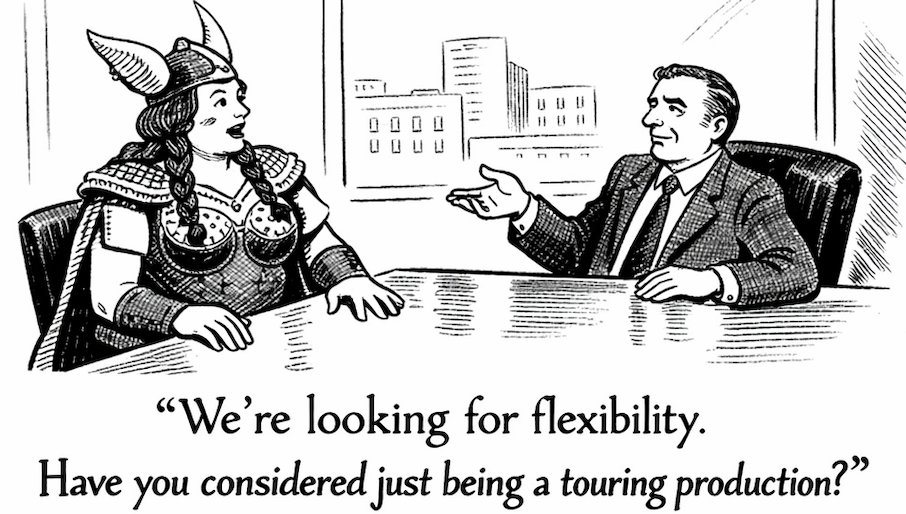
A Richard Grenell deleted social media post claimed that "having an exclusive Opera was just not financially smart" and that bringing in touring operas would offer flexibility. This fundamentally misunderstands how resident arts organizations function within host institutions. This isn't just wrong, it's backwards.
Resident organizations like the Washington National Opera provide predictable, stable revenue streams in an inherently volatile industry. A third-party organization focused on building and serving its own audience base takes significant financial and operational risk off the host institution's shoulders. The opera company cultivates relationships with donors, builds subscription audiences, manages production costs, and develops programming expertise, all specialized work that requires sustained institutional memory and community trust.
Touring productions, by contrast, represent speculation. You're betting that audiences will show up for companies and productions they have no relationship with, marketed by an institution that has systematically alienated much of its core constituency. Without the groundwork of cultivating a DC-based opera-going audience—the season ticket holders, the donor base, the education programs, the community relationships, you're essentially running a series of one-night stands and hoping each one succeeds.
The Washington National Opera wasn't "exclusive" in the sense Grenell implies—it was a strategic partner managing audience development and financial risk. The affiliation agreement signed in 2011 came specifically because the opera was facing financial challenges. The Kennedy Center provided infrastructure and the opera provided specialized programming expertise and its own revenue generation. This is how cultural institutions create sustainable models.
Now the Kennedy Center is assuming all that risk themselves, with a smaller staff, a politicized brand, alienated donors, and boycotting artists. They'll need to:
• Negotiate individual contracts with touring companies
• Market each production independently without the benefit of subscription sales
• Build audiences for companies with no local presence or relationship
• Compete with other venues for touring productions
• Cover costs upfront without the opera's donor base
This is "flexibility" only in the sense that being unemployed is "flexible." You have more options, but less security and fewer resources to pursue them.
The Absence of Vision: Where's the Audience Strategy?
Perhaps most damning is what we don't hear from Grenell: any coherent strategy for building audiences in an extraordinarily challenging environment.
The electoral math in Washington DC is stark. Donald Trump won 6.47% of the city's vote. While tourism provides a more diverse potential audience base, the Kennedy Center's aggressive politicization, the name change, the explicit "NO MORE DRAG SHOWS, OR OTHER ANTI-AMERICAN PROPAGANDA" messaging, the national anthem requirements, the hiring of culture war warriors, has made the institution itself a political statement.
Where's the audience development plan? How does Grenell intend to:
• Rebuild donor relationships after a well-documented collapse in contributions?
• Attract artists when high-profile names are publicly canceling commitments?
• Sell tickets when the institution's brand has become politically charged?
• Maintain tourism appeal when the building itself has become controversial?
• Cultivate local audiences in a city where 93.53% of voters rejected the president whose name now appears on the building?
These aren't rhetorical questions—they're the fundamental strategic challenges facing the institution. And we've heard nothing from Grenell suggesting he's even thinking about them, let alone has plans to address them.
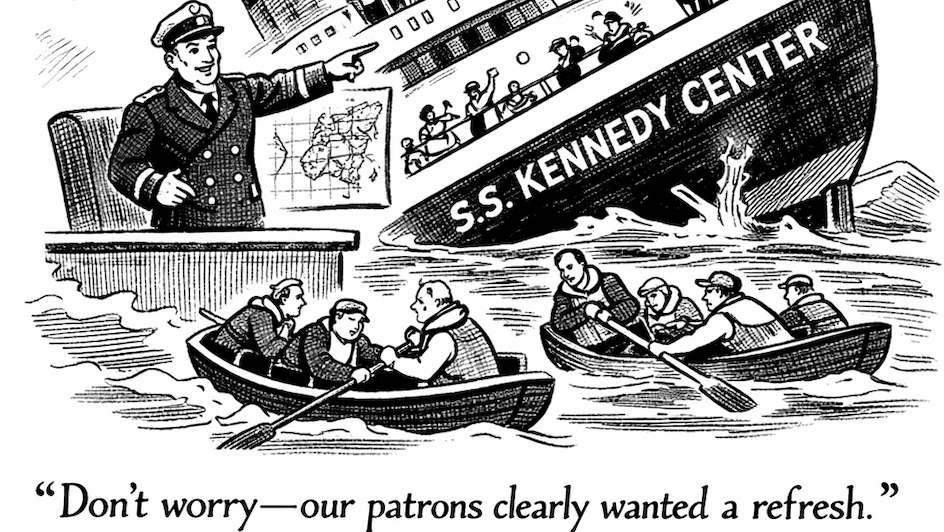
Instead, we get "our patrons clearly wanted a refresh,” a claim made without evidence about patrons who are, by all accounts, fleeing the institution.
Part Two: The Washington National Opera Departure
The Washington National Opera's exit from the Kennedy Center reveals more than an institutional divorce—it exposes how projection, deflection, and the absence of strategic planning compound organizational crisis. Richard Grenell's deleted social media post dismissing the opera as "not financially smart" while claiming "our patrons clearly wanted a refresh" demonstrates leadership that wins news cycles but destroys institutions. This analysis contrasts the opera's measured, professional response with Grenell's reactive crisis management, examining what happens when ideological commitment operates without operational competence—and why the missing audience development strategy matters more than any single policy decision.
How to Use This Article:
Share this with nonprofit boards, arts administrators, community stakeholders, and governance committees who need to understand what sustainable institutional leadership looks like versus opportunistic crisis management. Use it in board training materials, leadership development programs, executive search processes, or when advocating for strategic planning and professional management practices over ideologically driven decision-making that ignores operational realities.
Let’s talk about leadership. The most revealing aspect of the Washington National Opera and Kennedy Center separation is how each organization handled it. The Washington National Opera’s statement demonstrates what actual institutional leadership looks like in crisis:
“The board and management of the company wish the center well in its own future endeavors including recognizing the center for having secured significant funding, including $275 million from Congress, for upgrades to the center.”
This is measured, diplomatic, and notably absent of blame, even when the political situation made scapegoating extraordinarily easy. The opera company could have leaned heavily into the politicization narrative, pointed fingers at Grenell’s management, or used this moment to score points with its donor base. Instead, they took the high road, preserving relationships and institutional dignity while making clear they had to leave for operational reasons.
This matters because the Washington National Opera is thinking long-term. They need to find new venue partners, maintain donor relationships, keep artists engaged, and preserve their reputation. Burning bridges, even justified ones, would undermine those goals.
Grenell’s approach represents the opposite. His now-deleted social media post claiming the opera wasn’t “financially smart” and that “our patrons clearly wanted a refresh” accomplishes several things, none of them good:
1. Deflects responsibility by suggesting this was a predetermined business decision rather than acknowledging the crisis his leadership helped create
2. Contradicts the Kennedy Center’s own statement about a “financially challenging relationship,” creating confusion about institutional position
3. Demonstrates no awareness of audience development economics or how resident organizations function
4. Abandons institutional voice for personal social media performance
5. Burns bridges with an organization the Center worked with for decades
The deletion of the post is particularly telling, it suggests even Grenell or his advisors realized this was counterproductive, but the damage was done. This is reactive crisis management, not institutional leadership.
Projection and Deflection: The Illusion of Leadership
There’s a pattern here that extends beyond arts management into broader questions of institutional governance. Grenell’s approach demonstrates what happens when projection and deflection become substitutes for strategic planning:
Project blame outward: The problem is the opera wasn’t “financially smart,” not that the political environment made their partnership untenable.
Deflect from uncomfortable realities: Talk about “flexibility” and “refresh” instead of addressing donor flight and artist boycotts.
Claim imaginary mandates: Assert that “our patrons clearly wanted a refresh” when patrons are actually leaving.
Ignore long-term sustainability: Focus on winning the day’s news cycle rather than building institutional capacity.
This might get you through a news cycle. It might even satisfy political backers who prioritize loyalty over competence. But it doesn’t sustain an arts institution that needs to sell tickets, attract donors, book artists, and serve audiences year after year.
The Washington National Opera, meanwhile, is thinking institutionally. They’re preserving relationships, managing their transition carefully, and maintaining their reputation. They’re doing the harder work of building toward long-term sustainability rather than performing leadership for an audience of one.
What This Tells Us About Governance
This case study illustrates a broader truth about institutional governance: Ideological commitment without operational competence creates the crises it claims to solve.
Grenell presumably came to the Kennedy Center believing the institution needed political correction. He implemented policies designed to reshape the organization according to his vision of American culture. These policies had predictable effects: alienating core constituencies, driving away artists, collapsing donor relationships, politicizing the brand.
Now, as consequences arrive, the response is deflection. The opera company wasn’t “financially smart.” Patrons wanted a “refresh.” These are manufactured explanations for an institutional crisis that is, in fact, a leadership crisis.
The Washington National Opera is surviving this crisis precisely because they did the opposite: they built sustainable relationships, maintained professional standards, preserved institutional dignity, and thought strategically about their long-term position. They’re not immune to external political pressures, no organization is, but their response has been measured, professional, and focused on sustainability.
The lesson for arts leaders is clear: Projection and deflection might win a news cycle, but they don’t build audiences, attract donors, or sustain institutions. Real leadership requires humility about what you don’t know, grace under pressure, honest assessment of challenges, and strategic thinking about sustainability.
The Kennedy Center is learning this lesson the expensive way. The Washington National Opera already knew it.
Follow-Up: The Kennedy Center Interview and the Irony of Manufactured Crisis
The Kennedy Center’s Richard Grenell's recent PBS interview reveals a striking irony at the heart of the Kennedy Center crisis: by misunderstanding both nonprofit finance and his own audience, the new leadership has manufactured the exact commercial failure they falsely accused previous management of creating. This analysis examines how ideologically driven decision-making, armed with partial financial literacy and absolute confidence, transformed a healthy institution into one dependent entirely on partisan fundraising—and what this cautionary tale means for cultural organizations and governance more broadly.
How to Use This Article:
Share this with local government officials, potential donors, board members, and community leaders who need to understand how cultural institutions are funded and why they matter. Use it in advocacy campaigns for arts funding, donor cultivation materials, public education efforts, or when defending your organization's financial practices and programming decisions.
In my previous post, I outlined how misinformation about nonprofit arts finance was shaping the public narrative around the Kennedy Center's transformation. I argued that the widely reported "$100 million deficit" oversimplified the institution's financial reality and exploited public unfamiliarity with how cultural nonprofits actually operate.
Now, I typically write about small town and rural arts. The Kennedy Center is far from a small town arts organization. However, I believe it's important to discuss the Kennedy Center because the drama surrounding it has become a national story. America's smaller communities are no different from other American communities in that most people don't understand the complexities of how ticket-selling cultural institutions are funded. The messaging war about the Center creates an opportunity to fill that knowledge void with falsehoods. As we watch the turmoil at our national arts center unfold, it's crucial that we actively discuss the difficult realities of cultural nonprofit management, both financial sustainability and program delivery and their relationship to each other.
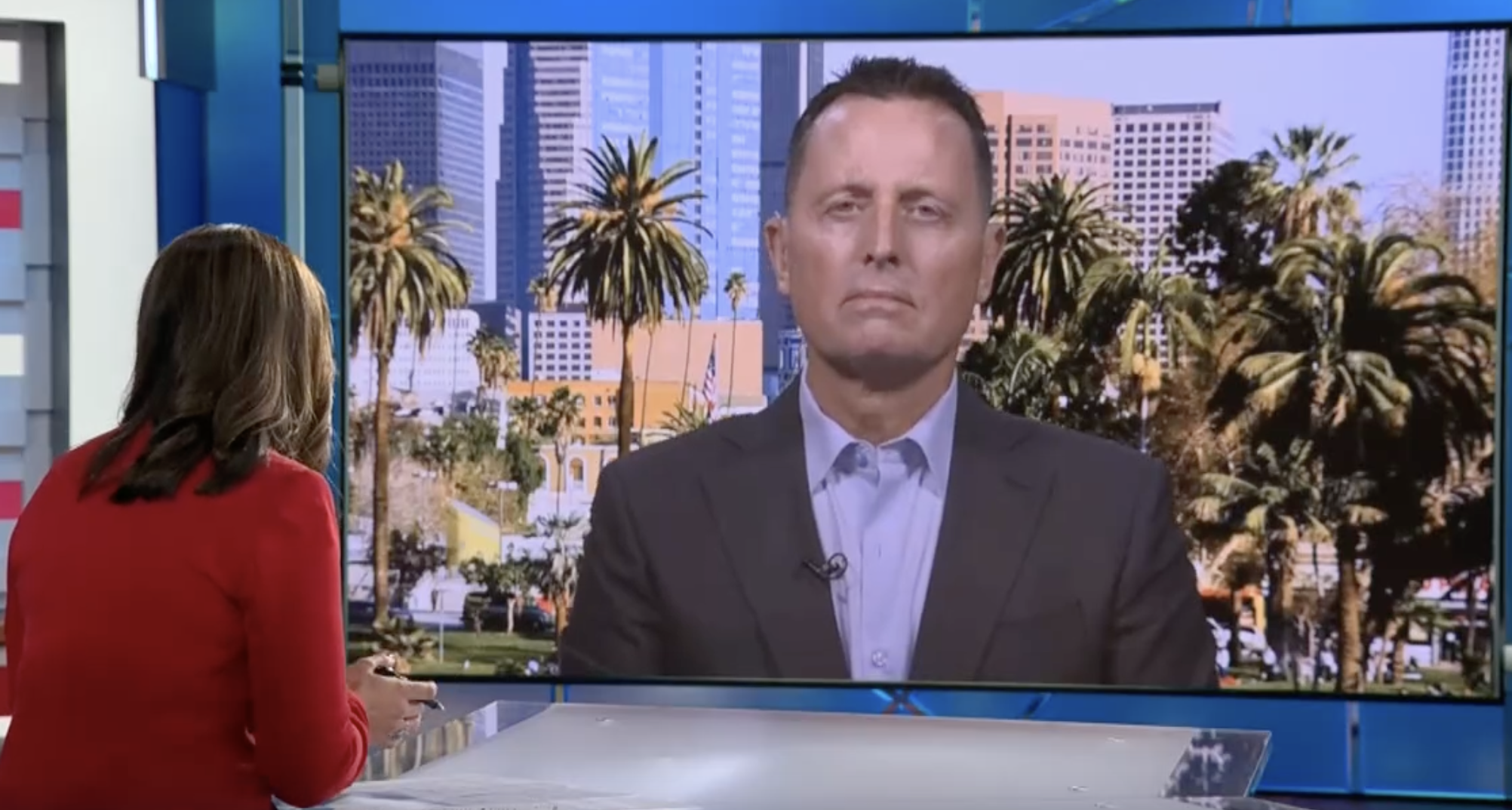
In a recent PBS NewsHour interview with Richard Grenell, now president of the renamed Trump-Kennedy Center, something more troubling was reavled. There isn’t just a simple misunderstanding of nonprofit finances. What emerges is a case study in how ideologically driven leadership, armed with partial financial literacy and absolute confidence, can create the very crisis it claims to be solving.
The Educator Who Just Learned the Material
Throughout the interview, Grenell positions himself as the financially savvy adult in a room full of arts professionals who don't understand basic economics. He repeatedly patronizes the interviewer, "let me just educate you about arts institutions,” while explaining that ticket sales alone cannot sustain programming and that diversified revenue streams are essential.
He is not wrong about this. In fact, he is describing the exact model that every successful performing arts nonprofit in America already uses. What makes his tone so striking is that he appears to be discovering these principles in real time, treating century-old nonprofit financial practices as revelations of his own business acumen.
For those of us who work in this field, watching Grenell explain that arts institutions need both earned and contributed income is like watching someone explain that restaurants need both food and customers. The observation is technically correct but reveals a fundamental lack of understanding about what was actually happening at the Kennedy Center before his arrival.
The Kennedy Center has always operated on a diversified revenue model combining ticket sales, donor contributions, corporate sponsorships, federal appropriations for building maintenance, and endowment income. This is not a secret. It is disclosed in annual reports and financial statements. The institution was not failing because previous leadership didn't understand this model. They built and sustained the institution on exactly these principles for decades.
The False Diagnosis
Here is where the narrative becomes more than just condescending—it becomes destructive. Grenell came into the Kennedy Center with a diagnosis: the institution was too "woke," not commercial enough, and programming unpopular shows that couldn't sustain themselves. His solution was to rebrand aggressively, align programming with the Trump administration's political identity, and emphasize "popular" programming that would attract ticket buyers.
But look at what he now admits in the interview. When pressed about artists canceling and asked if those shows were losing money, he pivots immediately to explaining that no arts programming can be sustained on ticket sales alone. He boasts about raising $130 million while simultaneously stating that tickets provide no profit margin, that the model requires charitable subsidy regardless of programming choices.
This creates a fascinating contradiction. If commercial viability through ticket sales was never actually possible, which is what he now correctly acknowledges, then what problem was he solving? The Kennedy Center before his arrival was successfully operating on exactly the model he now describes as necessary: combining ticket revenue with substantial charitable support.
Manufacturing the Crisis
The deeper irony is that by misunderstanding his audience and market, Grenell has now created the exact financial vulnerability he falsely claimed existed before.
Washington, D.C., where the Kennedy Center is located, is a politically diverse but predominantly liberal city. The institution's traditional audience—subscribers, donors, tourists, diplomatic community, cultural professionals, reflects this demographic reality. When the Kennedy Center rebranded as the "Trump-Kennedy Center," removed Kennedy's name from prominent signage, and appointed a board chosen entirely by the president, it alienated a substantial portion of its natural audience.
The result? Ticket sales have reportedly dropped significantly. High-profile artists have canceled. The Kennedy Center Honors, once a unifying national event, saw viewership decline 35 percent despite Grenell's attempts to explain this away through broader television trends. (Notably, he could not provide actual digital viewership numbers when pressed, instead directing the interviewer to "ask CBS" while claiming "tenfold" increases he couldn't substantiate.)
So now Grenell finds himself dependent entirely on the fundraising model he once criticized, because he has damaged the commercial viability he claimed to be enhancing. The $130 million he repeatedly cites is not evidence of a new, superior approach. It is a necessary emergency measure to compensate for lost ticket revenue and to signal to remaining supporters that the institution is financially viable despite the exodus of its traditional audience.
The Republican Fundraising Machine
Grenell's fundraising success likely reflects access to Republican donor networks and corporate sponsors aligned with the administration, not a sustainable business model. This creates several problems:
First, it transforms the Kennedy Center from a national cultural institution into a partisan one. When donors give because they support the administration rather than the artistic mission, the institution becomes dependent on maintaining that political alignment. What happens in a future administration? What happens if political winds shift?
Second, it masks the underlying problem. If ticket sales provide "no profit" as Grenell states, and if the institution has alienated much of its traditional donor base, then the current fundraising is papering over a structural crisis of legitimacy and audience. The very commercial failure he accused previous leadership of creating, he has now actually manifested.
Third, it represents a category error about what sustainability means. A healthy performing arts institution has ticket revenue that provides meaningful operating margin, supplemented by contributed income that allows for mission-driven programming, capital improvements, and reserves. An institution with no profit from tickets and complete dependence on politically motivated donors is not financially healthy, it is on life support, regardless of how much money flows in during the current favorable political moment.
The Union Deflection
Grenell repeatedly mentions that the Kennedy Center has 19 unions and that this makes programming "incredibly expensive." He presents this as a novel insight and a constraint that requires dramatic change.
But the Kennedy Center has always had these unions. They were not a surprise discovered upon his arrival. Previous leadership managed these relationships while maintaining robust programming, healthy attendance, and strong community support. The existence of unions does not explain the current crisis, the current crisis explains why unions are now being invoked as scapegoats.
This pattern should be familiar: identify long-standing structural realities, present them as newly discovered problems, use them to justify radical change, then claim credit for "solving" issues that were being successfully managed all along.
Circles Within Circles
The most revealing aspect of the interview is how Grenell talks in circles. He claims previous leadership didn't understand finance, while describing the exact financial model they successfully used. He says programming must be popular and commercial, while admitting commercial revenue is insufficient. He touts fundraising success as proof the institution is healthy, while describing a dependence on charitable giving that suggests ticket sales have collapsed.
He presents himself as a clear-eyed realist cleaning up decades of mismanagement, while exhibiting the confidence of someone who has just learned the vocabulary of nonprofit finance and believes himself to be the first person to understand these concepts.
For those of us in the field, this is both darkly comic and deeply concerning. It would be one thing if Grenell simply didn't understand arts finance—many board members and donors don't, and it's our responsibility to educate them. But Grenell has enough knowledge to be dangerous. He understands individual concepts but not how they fit together, and he wields this partial understanding with absolute certainty, making it nearly impossible to have substantive dialogue about what is actually happening.
An Allegory for Governance
The Kennedy Center situation offers a microcosm of a broader pattern in governance: assume the problem is ideological, apply an ideologically driven solution, discover that complex systems are actually complex, claim credit for "fixing" things while doubling down on approaches that create new problems, then obscure the resulting failures through aggressive messaging and selective metrics.
Grenell entered believing the Kennedy Center's problem was that it was too progressive, not commercial enough, and financially irresponsible. He solved this by making it aggressively political, driving away much of its audience, and becoming entirely dependent on partisan fundraising. He now describes this situation as success, citing fundraising numbers while admitting that ticket revenue provides no profit.
The confidence never wavers. The diagnosis never gets revisited. The possibility that the original analysis was wrong, that the institution was actually healthy and his intervention caused the crisis, is never considered.
This pattern extends beyond the Kennedy Center. We see it in how complex policy problems get reduced to simple narratives, how expertise gets dismissed as bias, how manufactured crises get used to justify preordained solutions, and how the resulting damage gets reframed as success through selective measurement and aggressive messaging.
What This Means for Arts Leaders
For cultural leaders watching this unfold, several lessons emerge:
First, financial literacy is necessary but not sufficient. Grenell demonstrates that someone can understand individual concepts—ticket sales alone are insufficient, unions are expensive, diversified revenue is important, while completely misunderstanding how these pieces fit together in a healthy institution. Education must be holistic, not just focused on isolated facts.
Second, know your audience and community. The Kennedy Center's greatest asset was its position as a genuinely national institution serving a diverse cultural and political landscape. By choosing to alienate a significant portion of that audience in pursuit of ideological alignment, leadership traded long-term sustainability for short-term political advantage. The commercial failure Grenell now faces was entirely predictable to anyone who understood the D.C. market.
Third, beware of solutions that create the problems they claim to solve. When someone diagnoses your healthy institution as failing and proposes radical intervention, examine the diagnosis carefully. The Kennedy Center wasn't broken. It had challenges—every arts institution does, but it was successfully managing them. Now it faces an actual crisis of audience, mission, and legitimacy.
Fourth, transparency becomes complicated when dealing with bad faith. In my previous post, I advocated for aggressive public education about nonprofit finance. I stand by that. But the Kennedy Center case shows the limits of this approach. Grenell uses financial language to obscure rather than illuminate, citing numbers out of context and presenting normal nonprofit operations as crisis or revelation depending on what serves his narrative. When dealing with this kind of rhetorical strategy, transparency alone is insufficient—we also need critical media literacy and audiences capable of recognizing when financial information is being weaponized.
Conclusion: The Real Crisis
The tragedy of the Kennedy Center situation is not financial mismanagement, there wasn't any, despite the claims. The tragedy is that a healthy, if imperfect, cultural institution has been transformed into a politically branded entity that has alienated much of its natural audience while becoming dependent on partisan support structures that may not be sustainable beyond the current political moment.
Grenell positions himself as a truth-teller educating the financially naive about how arts institutions really work. In reality, he is someone who learned the vocabulary of nonprofit finance just well enough to misdiagnose a healthy institution, apply an ideologically driven solution that created an actual crisis, and now claims credit for solving a problem that didn't exist until he arrived.
The real lesson here is not about nonprofit finance, it's about the danger of combining partial knowledge, absolute confidence, ideological certainty, and institutional power. Whether in a performing arts center or in governance more broadly, this combination can transform functional complexity into dysfunction while the people responsible congratulate themselves on their clear-eyed realism.
For those of us committed to cultural institutions and their missions, the path forward is unchanged: we must continue to educate, to build broad-based community support, to operate with genuine transparency, and to articulate clearly what we are trying to accomplish and why it matters. But we must also recognize that sometimes the threat is not misunderstanding, it is certainty without wisdom, intervention without insight, and the confidence of those who have just enough knowledge to be dangerous.

The YES! House: The Evolution of a Creative Hub in Rural Minnesota
The YES! House in Granite Falls, Minnesota is transforming a once-vacant downtown building into a welcoming home for arts, civic life, and community connection. Led by the Department of Public Transformation, the project uses artist-driven design and strong local input to make sure the space reflects and supports the creativity that is already thriving in the town. It is a powerful example of rural revitalization through community imagination and shared cultural resources.
How to use this article: This article can serve as a valuable case study for rural arts revitalization, showing how a community can transform a neglected building into a center for creativity and civic life. It offers practical inspiration for artist-led planning and community input, helping organizations design projects that reflect local culture rather than replace it. Educators and advocates can use the story to illustrate modern placemaking strategies and support fundraising for similar efforts. It also provides a point of connection for practitioners who want to learn from and adapt the YES! House model in their own communities.
Every year I attend the Radically Rural Conference in Keene, NH. I meet some extraordinary people doing some extraordinary things. This year was no different and I was introduced to a number of organization I want to orient you to in the coming months. To begin, let’s head to Minnesota.
In the small riverside town of Granite Falls, MN, an ambitious project is unfolding: the transformation of a donated building into a vibrant community arts and civic gathering space. The YES! House stands as a strong example of how rural arts infrastructure can be designed from the ground up for collaboration and locally sourced creativity. As you may know from reading some of my other posts and listening to some of my interviews, the strongest rural arts projects utilize the creative resources and culture of a community and do not supplant them.
Origins and Site
The YES! House is located in a once vacant building and was donated in early 2018 to the nonprofit Department of Public Transformation (more about them in a future podcast and article). Rather than accepting the label of abandonment, the team took a different stance: the building was actually wanted by community members if its potential was realized. In that spirit they embraced stewardship, not ownership.
From the start, the project avoided duplicating existing assets: there was a deliberate phase of mapping community resources, learning what was already thriving, and identifying gaps rather than competing.
Design & Process
The YES! House’s programming and design were shaped by a year‐long “Artist‐Led Design Build” process. Local and national artists and architects, such as Homeboat, MO/EN Design Practice, and the Southwest Minnesota Housing Partnership facilitated this collaborative effort.
During this period the team collected input from residents: about what programming they wanted, what kinds of facilities would support creativity and civic life. This approach positions the YES! House not simply as a venue but as a reflective response to rural community needs.
Purpose and Vision
At its core the YES! House is propelled by three interlocking aims:
Creative gathering space: A place for artists, community members, and civic actors to work, meet, and generate projects together.
Community asset activation: The aim is to amplify existing local arts and civic efforts, not supplant them. By acknowledging strong assets already present in the region, the YES! House seeks to build synergy rather than redundancy.
Rural renewal through creativity: The vision embraces the power of “rural creativity” to respond to community challenges and opportunities. DoPT frames this as “developing creative strategies for increased community connection, civic engagement, and equitable participation in rural places.”
Governance & Acknowledging Structural Issues
Importantly, the narrative of the YES! House includes a transparent acknowledgement of structural inequities. The organization notes that it benefits from privileges embedded in dominant nonprofit systems—white leadership, patterns of resource distribution—and commits to an ongoing journey of humility and transformation.
In fall 2022 DoPT launched the YES! House Futures Committee to guide future operations via a community‐led process.
Current Status and Invitation
While the building is still under construction, the YES! House already hosts events, tours, and regular open hours. This transitional phase underscores a key point: the house is not waiting to be “perfect” before engaging the community, it is activating now.
Why This Matters for the Arts and Rural Communities
The YES! House offers several important takeaways for the Small Town Big Arts readers:
Artist‐led design in rural contexts: It demonstrates that credible arts infrastructure in small towns can emerge through participative processes rather than top‐down models.
Complementarity vs. competition: The strategy to map existing assets and avoid duplication is especially relevant in under‐resourced communities where overlap drains scarce resources.
Stewardship mindset: The shift from “ownership” to “stewardship” aligns with newer thinking around community‐based arts ecology—where the organization acts as custodian rather than controller.
Transparency around equity and systems: By naming the privileges the organization holds and inviting shared governance, the YES! House model pushes toward more equitable rural arts infrastructure.
Activation before completion: Engaging the community before the “final build” sends a strong message about process, access, and iterative creation.
How This Could Apply More Broadly
For small‐community arts organizations the YES! House can serve as a useful case study. Some ways to adapt it:
Use a design‐build participatory process: Invite artists, residents, youth, elders to shape program from day one.
Conduct an asset inventory: Map local arts, culture, civic, physical infrastructure—identify gaps rather than reinventing.
Frame infrastructure as “stewardship” not mere “development” to emphasize community ownership.
Embed equity reflections early: Acknowledge systems of privilege and build governance structures that share power.
Activate before completion: Even with partial capacity, start hosting events, gathering feedback, adapting.
Define success broadly: Not only visits or revenue, but connectivity, resilience, community agency.
Final Thoughts
The YES! House is more than a building. It is a micro‐model of what rural arts infrastructure could become: locally grounded, creatively anchored, governance‐aware, and community‐led. For those leading the arts in small communities, it offers fresh inspiration and tangible lessons for how arts administrators can collaborate with rural places to build places and programs that resonate, endure, and evolve.

Trying to get the arts moving in your town? Consider a 501 (c)7 Social Club.
In this feature, Small Town Big Arts explores how a 501(c)(7) “arts social club”—a membership-first venue for music, dance, comedy, and cabaret—can sustain frequent programming without leaning on fragile charitable pipelines. We outline practical ticketing tactics (guest-of-member access, short-term social memberships) and a clean (c)(7)+(c)(3) hybrid that accommodates grants and education programs while keeping dues and member pricing at the core. The result is a resilient, community-owned engine for culture that aligns operations with how people actually gather.
How to Use This Article: Share with board members, venue founders, and municipal partners considering alternatives to a 501(c)(3)-only plan. Use it in feasibility studies, bylaw drafting, and budget modeling to map revenue mix and compliance thresholds. Bring it to advocacy meetings to demonstrate how member economics can sustain weekly calendars, and include it in arts administration syllabi or creative placemaking toolkits as a replicable, small-market model.
I’ve been searching for alternatives to the 501(c)(3) model for arts organizers as the nonprofit framework faces mounting strain. With the direct and largely indirect effects of declining federal support for the non-profit sector nationwide, it’s clear we need new approaches to delivering the arts in the U.S. The 501(c)(3) is especially ill-suited to sustainability in communities that lack deep private wealth, active community foundations, or strong local government backing.
While scrolling Instagram, hardly a foolproof research method, I came across the 501 (c)7 social. club Eugene V. Debs Hall via Neighborhood Evolution, and a light bulb went off. As “The Happy Urbanist,” Jon Wesolowski narrates it, “It’s about listening to the community, shaping buildings to serve people, and creating benefits that a typical business model can’t… This social hall does just that—keeping housing affordable, bringing neighbors together, and anchoring a public square.”
So, I thought, I wonder if there are any 501 (c)(7) social clubs focused on the arts? That is when I found the Ruba Club in my old stomping grounds of Philadelphia.
I found the club on a recent visit to the City of Brotherly love tucked along Green Street in Philly’s Northern Liberties neighborhood. The Ruba Club, originally the Russian United Beneficial Association, has welcomed members and artists for more than a century. Founded in 1914 and still operating at 416 Green Street, the bi-level social club marries a downstairs cabaret/speakeasy bar with an upstairs ballroom theater and full stage. Today it functions as an inclusive, nonprofit social venue with a weekly slate that ranges from cabaret and burlesque to karaoke nights and live bands, an enduring example of how a membership-forward clubhouse can double as a dependable performance engine. (rubaclub.org, The Temple News, facebook.com)
Why consider 501(c)(7) for the arts in small communities?
For small communities that want a lively, sustainable home for music, comedy, dance, or cabaret, the social-club model can be a powerful alternative (or complement) to a 501(c)(3). A 501(c)(7) exists primarily for the pleasure and recreation of members and is meant to be funded mainly by dues, fees, and member charges, not philanthropic gifts. That member-centric engine is especially well-suited to intimate venues, lounges, and halls that program frequent live performances and cultivate a “regulars” culture. (IRS) It also creates a wide sense of ownership and community engagement and is less passive than philanthropic giving.
Below is a step-by-step framework you can adapt, plus concrete ticketing tactics and a hybrid structure that combines (c)(7) and (c)(3) benefits.
1) Fit check: Is (c)(7) the right tool?
Member-first purpose. Your programming, bar/room usage, and social life should primarily serve members (and their guests). If your core aim is broad public education and grant-funded outreach, a (c)(3) may be your main vehicle. (IRS)
Revenue mix discipline. As a rule of thumb, a (c)(7) can take up to 35% of gross receipts from non-members(including investment income). Within that 35%, no more than 15% should come from the general public’s use of facilities/services. Staying under those thresholds helps preserve exemption. (IRS)
UBIT awareness. Nonmember income is generally taxable to a social club (UBTI), and too much can also threaten exemption—so design your calendar and ticketing to favor members. (IRS)
Practical signal: If you can imagine a healthy P&L driven by annual dues, member ticketing, and bar/concessions—with outsiders as the minority—(c)(7) likely fits.
2) Formation roadmap (lean, realistic, and compliant)
Incorporate a nonprofit social club in your state (articles/mission emphasizing recreation, arts, and social purposes for members).
Draft bylaws that define membership classes, admissions, dues, guest privileges, and discipline; include conflict-of-interest, fiscal controls, and dissolution clauses.
Design a membership program (see §3 below).
File for IRS recognition using Form 1024 (not 1023) with the user fee; follow Publication 557 for (c)(7) specifics. (IRS)
License & local compliance: ABC/liquor, occupancy, entertainment, sales tax, and any city permits (often easier for “member clubs,” but confirm locally).
Policies that protect status: guest rules, rentals policy, private events, comp tickets, reciprocal agreements, and a clear “members-first” event cadence.
Quick win: Prepare a one-page “Operating Intent Statement” that your board and bookkeeper use as a north star: “The club’s activities and marketing prioritize members; nonmember access is limited, controlled, and tracked for the 35%/15% tests.”
3) Membership model that actually funds the stage
A. Structure & pricing (sample):
Core Member (21+): $180/year or $20/month; benefits = members’ ticket price, priority reservations, guest privileges, member-only hours.
Household Add-On: +$90/year for a second adult at same address.
Under-30 or Artist Tier: $90/year; keep the door open to young creatives.
Supporting Member: $360/year with a few “+1” guest passes per quarter.
B. Member benefits to reinforce your exempt purpose
Member-price tickets (e.g., $10 member / $15 guest).
Members-only windows (e.g., first 48 hours of on-sale).
Members-only nights (e.g., Wednesdays + one Saturday per month).
Member lounge/balcony access, coat check, or drink specials (if permitted).
C. Guest & short-term access tactics
Guest-of-member rule (e.g., 2–4 named guests per visit).
Short-term “social membership” added to nonmember tickets (e.g., $1–$3 surcharge per ticket that enrolls buyer as a 30-day social member). This is a real-world tactic used by venues such as the Italian American Club of Las Vegas, which displays an explicit “30 Day Social Membership” charge for non-members when purchasing show tickets. (Italian American Club, CoffeeCup, Italian American Club)
Copy-ready snippet for checkout pages:
“Non-member tickets include a 30-day Social Membership surcharge, which provides temporary member access for the performance date and eligible club activities during the 30-day window.”
4) Programming & ticketing that keeps you inside the lines
A. Calendar cadence
Start with 3 member-forward nights/week (e.g., Wed/Thu/Sun) and 1 public-facing night (Fri), plus one rotating member-only Saturday each month.
Offer members-first on-sale windows and keep member allocations (e.g., reserve 60–70% of capacity for members/guests).
B. Ticket classes (example)
Member Ticket: lowest price; sold to active members only.
Guest Ticket (Member-sponsored): slightly higher; requires member ID at checkout.
Short-term Social Member Ticket: includes the 30-day add-on (auto-enrolls buyer).
Public Ticket: restricted quantity, higher price, and only for designated shows.
C. Bar & room use
Prioritize member happy hours, jam sessions, and social dances.
Rentals to outsiders should be limited and priced at market; track those revenues distinctly for compliance/UBIT analysis. (IRS)
D. Real-world analogues to learn from
Verdi Club (San Francisco) programs weekly swing nights with live bands (“Woodchopper’s Ball”)—clear example of routine live music within a social-club context. (Verdi Club, woodchoppersball.com)
Italian American Club of Las Vegas uses a non-member ticket + 30-day social membership mechanism in its showroom offerings. (Italian American Club, CoffeeCup, Italian American Club)
5) The hybrid: Pairing a 501(c)(7) club with a 501(c)(3) foundation
If your community wants both vibrant club life and tax-deductible gifts/grants for education, youth access, or heritage programming, establish a separate 501(c)(3) that can receive donations and run public-benefit programs. A clean example in the wild is the San Francisco Italian Athletic Club (a 501(c)(7)) with a separate SFIAC Foundation (501(c)(3))supporting cultural/educational efforts. (Cause IQ, app.candid.org, The SFIAC Foundation)
How to set it up responsibly:
Separate entities (articles, EINs, boards, bank accounts).
Facility-use agreement: The (c)(3) rents the room from the (c)(7) at fair market value for public programs.
Cost-sharing policy: If you share staff/gear, allocate costs with simple, auditable formulas.
Firewall the money: Donations go to the (c)(3) only; (c)(7) relies on dues/fees.
Clear branding: One “Club” (member social life) and one “Foundation” (charitable programs).
Programming split (example):
(c)(7) Club: member dances, jam nights, lounge shows, comedy lab, member holiday party.
(c)(3) Foundation: free student matinees, artist residencies in schools, heritage lectures, an annual public festival, and scholarship tickets that bring underserved residents into select events.
6) Compliance guardrails (simple, but non-negotiable)
The 35/15 guideline: Monitor nonmember receipts monthly. Keep nonmember total ≤35% of gross; within that, public facility use ≤15%. (These limits derive from legislative history and IRS guidance; they’re widely used benchmarks in examinations.) (IRS)
Track by source, not just event. Your POS/accounting should tag revenue as Member, Guest-of-Member, Short-Term Social Member, Public, Rental, Investment, etc.
Mind UBIT. Budget for tax on nonmember income; file as required. (IRS)
Marketing tone: Promote membership and members’ nights prominently; keep overt “public nightclub” messaging in check.
Governance & inurement: No private benefit to insiders; pay artists, staff, and vendors at fair market rates; document everything.
7) 90-day launch plan (template)
Days 1–30: Organization & finance
Form your nonprofit corporation; seat a founding board.
Draft bylaws and membership policy (classes, dues, guest rules).
Choose an accounting system with class/department tracking for revenue sources.
Build a dues + ticketing + bar P&L that works before nonmember sales.
Days 31–60: IRS + systems
File Form 1024 for (c)(7); gather support docs per Publication 557. (IRS)
Set up ticketing checkout to implement (a) member pricing, (b) guest tickets, and (c) short-term social membership overlay for nonmembers. (Model the 30-day add-on.) (CoffeeCup)
Adopt Facility-Use & Rentals policy (member priority; limited public/market-rate).
Days 61–90: Soft opening & calibration
Run 6–8 member-led pilots (open-mic, jazz trio, swing social, comedy night).
Add one public-facing show with limited public tickets and a 30-day social membership surcharge. Track receipts.
If you plan a hybrid, file your (c)(3) foundation in parallel and draft the MOU for space use.
8) Copy-ready templates
Membership classes (bylaws excerpt)
The Club shall have the following classes of members: (a) Core Members, (b) Household Add-On Members, (c) Under-30/Artist Members, and (d) Supporting Members. Members are admitted by application and payment of dues. Members in good standing may sponsor up to four guests per visit. The Board may authorize short-term social memberships, conferring limited privileges for a defined period not to exceed 30 days.
Guest & short-term social membership rule (policy excerpt)
Non-member attendance at performances occurs (i) as a guest of a Member, or (ii) through the purchase of a ticket that includes a short-term Social Membership (e.g., 30 days). Revenues from such sales are tracked as member-related for compliance monitoring. The Club limits public attendance and rentals to maintain nonmember receipts within IRS guidance. (IRS)
Ticketing checkout language
Non-member tickets include a 30-day Social Membership surcharge, providing member privileges for the performance and eligible activities during the 30-day period. (CoffeeCup)
(c)(7)–(c)(3) facility-use MOU (excerpt)
The Foundation (501(c)(3)) rents the Hall from the Club (501(c)(7)) at fair-market rates for public educational programs and performances. The Foundation operates its own box office for charitable events and retains program revenue. Shared costs (front-of-house, utilities) are allocated by agreed ratios and documented monthly.
9) Common pitfalls (and how to avoid them)
Public-heavy calendars. Solution: Flip your ratio—more member nights, advance member on-sales, and higher public prices with smaller public allocations. (IRS)
Commingled money. Solution: Separate bank accounts (and bookkeeping) for the Club and the Foundation; written cost-sharing and rental terms.
“Set and forget” compliance. Solution: Monthly dashboard showing member vs. nonmember receipts and a year-to-date 35/15 ticker.
10) Final thought
If your community craves a warm, reliable room where artists and neighbors gather weekly—swing night, songwriter circle, late-set jazz—the 501(c)(7) can be the most culturally authentic and financially realistic vehicle. Pair it with a (c)(3) for public-benefit programs, and you get the best of both worlds: a dues-driven clubhouse that keeps the lights on and a charitable arm that expands access and mission impact. Just keep the member heart beating at the center—by design, by calendar, and by the numbers. (IRS)
*Not legal advice. Before filing or selling tickets, consult nonprofit counsel/CPA and your local ABC authority to adapt these strategies to your state’s requirements.

What Powers Rural Bath County’s Cultural Ecosystem?
Nestled in the Allegheny Highlands of Virginia, Bath County is quietly leading a cultural renaissance. In this feature, Small Town Big Arts explores how two cornerstone organizations—the Garth Newel Music Center and the Bath County Arts Association—are creating deep, lasting impact in a rural community of just over 4,000 residents. Small Town Big Arts explores how even modest public investment through the a public source like the Virginia Commission for the Arts fuels creative infrastructure, civic pride, and economic vitality in one of the nation’s most arts-vibrant rural regions.
How to Use This Article: Share this with arts advocates, rural leaders, and policymakers to illustrate the value of public arts funding in small communities. Use it in grant proposals, board meetings, or advocacy campaigns to make the case for sustained investment in cultural infrastructure. Include it in arts administration coursework or community development toolkits as a model for rural arts impact.
🎧 Listen on Spotify, Listen on Apple Podcasts, Watch on YouTube
In the rolling Allegheny Highlands of Virginia, you’ll find Bath County—population 4,500—anchored by winding mountain roads, towering forests, and the kind of quiet that invites reflection. You might not expect to find a world-class chamber music center, a 60-year-old regional art show, or a new community arts hub. And yet, Bath County isn’t just home to these things—it was recently named one of the Top 30 Most Arts-Vibrant Rural Communities in America by SMU DataArts.
What sets Bath County apart? According to leaders at the Garth Newel Music Center and the Bath County Arts Association, it’s a unique blend of local vision, private generosity, and public funding that empowers rural creativity to thrive.
🎻 Rooted in Place: Music, Mountains, and Meaning
For Jeanette Fang, artistic director and pianist at Garth Newel Music Center, the answer is simple: “There’s something to be said about making music in a place of natural beauty. The harmony in nature deepens the harmony in music.”
Garth Newel has been offering concerts, residencies, and youth programming year-round since 1973. It is not just a summer festival—it is an enduring part of the county’s economic and cultural fabric. From touring across Virginia through the Virginia Commission for the Arts’ Artist Roster to hosting local K-12 string programs that fill education gaps in area schools, Garth Newel does what rural arts institutions do best: adapt, anchor, and connect.
“Without the support of the Virginia Commission for the Arts,” Fang notes, “we would lose a lot. Their touring directory helps us reach new communities. Their funding underwrites our ability to offer free or low-cost programs. They’re not just funders—they’re partners.”
🖼 A New Chapter for a Legacy Organization
Bath County Arts Association (BCAA) has been enriching the local arts scene for over six decades. Known for its flagship Bath County Art Show, which now exhibits close to 1,000 works annually, the BCAA is entering a new era. This year, the group hired its first full-time Executive Director and will soon open “The Bear”—a brick-and-mortar community arts space in downtown Hot Springs.
“I’ve received BCAA support as a student, an artist, and now as a leader,” says Sage Tanguay, the new director. “They paid for books when I was studying at UVA. Later, they helped fund dance classes I taught in the county. This organization has always believed in me—and in Bath County.”
Board President Leigh Johnson describes the Bear as a "unifying space," where residents—many of whom live miles apart across mountainous terrain—can gather for workshops, exhibitions, or just a shared conversation. It’s more than a gallery; it’s a civic living room.
📈 Statewide Arts Impact: Why Public Funding Resonates in Bath County
In 2022, nonprofit arts and culture organizations and their audiences generated a staggering $151.7 billion in economic activity across the United States. Of that, $73.3 billion came from organizational spending and $78.4 billion from event-driven audience expenditures—fueling 2.6 million jobs and contributing $29.1 billion in tax revenue nationwide.
The ripple effects are evident in Virginia. In the Richmond–Tri-Cities region, the nonprofit arts sector produced nearly $330 million in economic activity, supported 6,742 jobs, and returned over $82 million in tax revenue. Even in smaller metropolitan areas such as South Hampton Roads, arts-related economic activity reached $270 million, with audiences spending an average of $35–$36 per event beyond ticket prices.
At the heart of this ecosystem is the Virginia Commission for the Arts (VCA). Along with the Virginia Touring grants utilized by the Garth Newel Music Center, the VCA supports communities through Creative Communities Partnership grants, Community Impact grants, Arts In Practice grants, Education Impact grants, and most importantly General Operating grants. These public programs bring access, stability, and visibility to arts organizations across the Commonwealth—from urban centers to rural enclaves.
🌄 Why It Matters in Bath County
Bath County is not a metro area, nor does it generate hundreds of millions in cultural revenue. But it doesn’t need to. What Bath offers—through organizations like the Garth Newel Music Center and the Bath County Arts Association (BCAA)—is a compelling example of how small, strategic investments in the arts yield profound local returns.
With a population of just over 4,000 residents, Bath County's arts infrastructure plays an outsized role in its civic life. Public funding from the VCA is essential in sustaining this ecosystem, providing:
Stability for year-round programming, particularly during non-peak seasons,
Accessibility for underserved residents through free events, youth scholarships, and arts education,
Tourism leverage that multiplies modest grants into economic activity via overnight stays, restaurant visits, and retail engagement.
Bath County is a microcosm of what public arts funding is designed to achieve—it ensures that cultural life is not reserved for the wealthy or the urban, but is instead embedded in the fabric of every Virginia community.
🧠 Public Dollars, Big Returns
Public arts funding delivers measurable impact at every level—from national to hyperlocal. According to the AEP6 study, nonprofit arts and culture organizations generated $151.7 billion in economic activity across the U.S. in 2022, underscoring the sector’s national significance. In Virginia, the Richmond–Tri-Cities region produced nearly $330 million in arts-related activity, while South Hampton Roads contributed $270 million, both demonstrating strong returns in communities of varying sizes. At the state level, the Virginia Commission for the Arts supports a wide range of programs across the Commonwealth, including rural and underserved areas. In Bath County, while the dollar figures may be smaller, the impact is no less profound—public funding amplifies access to arts education, drives cultural tourism, and strengthens the civic infrastructure that makes creative life possible in this remote Appalachian community.
🧩 Public Funding as Cultural Infrastructure
While Bath County benefits from the generosity of local donors and seasonal residents, leaders at both Garth Newel and BCAA emphasized that private philanthropy alone cannot sustain the arts in a rural setting.
“We wouldn't exist without our membership and donors,” said Leigh Johnson, President of BCAA. “But what public funding provides is continuity and reach.”
With the recent hiring of a grant writer, BCAA is now actively pursuing state and federal funds that will deepen its community impact. Public support isn’t just additive—it’s catalytic.
“Diversity of funding is everything,” added Jeanette Fang, Artistic Director at Garth Newel. “You can’t build a resilient arts organization on private donations alone. The VCA and NEA allow us to plan—not just survive.”
That sentiment rings especially true in places like Bath County, where a single organization often serves as educator, presenter, employer, and civic hub. Without public funding, the entire ecosystem is at risk. With it, communities flourish.
🌱 Why It Matters Now
As national debates over public arts funding escalate—and as rural communities continue to grapple with underinvestment in infrastructure—Bath County offers a clear example of what happens when even modest public dollars are paired with local ingenuity.
These investments pay dividends:
Tourism driven by the arts supports local inns, restaurants, and galleries.
Youth education fills the gaps left by under-resourced school districts.
Creative placemaking encourages remote workers and former residents to return and stay.
Tangway puts it best: “In cities, if one arts organization closes, something else takes its place. In a rural place like Bath, if it’s not supplied by us, it doesn’t happen at all. That’s why we need support.”
🏛 Arts as Public Good
Virginians for the Arts, the arts advocacy organization for Virginia, is currently advocating for a $1 per capita investment in the arts through the Virginia Commission for the Arts. For a place like Bath County, that single dollar would go so very far. It would support performances in school gyms, classes in renovated storefronts, and concerts under the stars that become family traditions.
Bath County isn’t simply consuming the arts—it’s creating a model for rural cultural sustainability that the rest of the country should pay attention to.
📍 Listen to the full interviews with Bath County Arts Association and Garth Newel Music Center on the Small Town Big Arts podcast
🎧 Listen on Spotify, Listen on Apple Podcasts, Watch on YouTube
🔗 Learn more and support advocacy for public arts funding at vaforarts.org

Seeing Small Towns Anew: How “Outsiders” Can Authentically Create Art About Community
For years, small towns have been told that decline is inevitable and reinvention improbable, but in Slice of Life: The American Dream. In Former Pizza Huts, filmmakers Matthew Salleh and Rose Tucker offer a vision where empty buildings become community lifelines and abandoned chain restaurants transform into stages for hope, humor, and human connection. As Matt aptly noted, documentary filmmaking is often described as “being a fly on the wall,” but “flies on walls are very annoying”; real understanding comes from building trust, sharing meals, and truly listening.
How to Use This Article: Share this with artists interested in creating work about small communities and with arts organizers in small towns seeking to engage outside collaborators in meaningful ways. Use it in grant proposals, artist residency briefs, or board discussions on community-engaged practice.
Listen to the Podcast or Watch the Podcast
When I have approached the arts in small towns and rural places, I often focus on the art made in them — art installations in the farm land of Wisconsin, live theater in the woods of rural Virginia, murals beautifying a main street in Oklahoma. But what happens when artists from the outside turn their gaze toward these places? Can they represent small towns authentically and meaningfully?
There is a chapter in Rural Arts Management by Elise Lael Kieffer and Jerome Socolof, that discusses the difference between “outsiders” and “insiders” in the context of artists in communities. An artist can be either and be effective, but it is important they understand which one they are. This impacts how they collaborate, orient themselves to the audience, and how they produce their work. Today’s blog post looks at that orientation.
In a recent episode of Small Town Big Arts, I spoke with Australian filmmakers Matthew Salleh and Rose Tucker about their remarkable documentary Slice of Life: The American Dream. In Former Pizza Huts. The film explores a distinctly American phenomenon: abandoned Pizza Hut buildings scattered across the country, now reborn as LGBTQ+ churches, family-run restaurants, karaoke bars, dispensaries, and more.
For many, these quirky transformations might seem like curiosities. But through Salleh and Tucker’s lens, they become powerful metaphors for community reinvention and resilience — themes that resonate deeply across small-town America.
The filmmakers approached their subject with what they called an “outsider eye,” inspired by the German director Wim Wenders' approach to America in Paris, Texas. As recent transplants to the U.S., they brought curiosity and humility rather than assumptions. They didn’t rush in with a script or fixed narrative; instead, they allowed each community’s story to unfold organically.
This patient, relationship-centered approach offers a vital lesson for any artist hoping to engage with a place that isn’t their own: time and trust matter more than any artistic agenda. Before ever turning on a camera, Salleh and Tucker spent days simply being present — sitting with business owners, sharing meals, and listening.
As Matt insightfully shared, documentary filmmaking is often described as “being a fly on the wall,” but, as he put it, “flies on walls are very annoying.” Instead of invading or imposing, they aimed to blend in, to earn the trust of their subjects by showing up fully and openly.
Beyond capturing the beauty of these revitalized spaces, Slice of Life does something equally important: it doesn’t shy away from the struggles and vulnerabilities of those who create and sustain them. The film highlights the immense effort it takes to build what urban sociologists call “third spaces” — places beyond home and work where community life unfolds.
These third spaces can be karaoke bars on a quiet Tuesday night, a church that doubles as a community refuge, or a taqueria in a former pizza parlor. The film reveals the joy and pride in creating these spaces, but also the financial strain, the loneliness of leadership, and the uncertainty of waiting for people to come.
It’s a powerful reminder that community creation is both an act of optimism and an ongoing challenge. Artists and entrepreneurs alike often take on immense risks, hoping that if they “build it, they will come.” Yet, as the film shows, success rarely comes overnight, and the emotional and economic costs are real.
For artists, Slice of Life is a call to consider not just the surface of a place, but its layers of hope, struggle, and renewal. It encourages us to create art that reveals rather than dictates, that listens rather than lectures.
Tucker offered practical advice to artists stepping into unfamiliar communities: take your time, share your own story in return, and don’t arrive with rigid expectations.
Art made about small towns can be just as transformative as art made in them — if approached with care, humility, and a willingness to be changed by the process.
As artists and cultural workers, we have the privilege and responsibility to help communities see themselves with fresh eyes. In doing so, we can help them reclaim empty spaces, shift harmful narratives, and celebrate the quiet power of local dreams — in all their beauty, struggle, and resilience.
To learn more about Matt and Rose, visit their website: urtextfilms.com

What if rural revitalization isn’t about restoring the past, but designing a future?
For years, small towns have been told that decline is inevitable and reinvention improbable. But in Princeton, West Virginia, the RiffRaff Arts Collective has quietly disproved that narrative—one mural, one open mic, one coalition at a time. Their story is not just inspirational. It’s instructional. This isn’t about parachuting in solutions—it’s about planting roots, sharing power, and leading with art.
How to Use This Article: Share this with community organizers, funders, municipal leaders, and creative entrepreneurs who are tired of top-down “fixes” that ignore local potential. Use it in grant narratives, policy discussions, or case studies exploring creative placemaking. Let it be a model, a mirror, and a provocation for what’s possible when arts institutions choose coalition over isolation, and strategy over survival.
Reviving West Virginia: The Transformative Power of the RiffRaff Arts Collective. Deeply rooted in creativity, trust, and place.
I am often on the hunt for organizations and communities that can serve as models for others. I found another a great one this spring. Nestled in the heart of downtown Princeton, West Virginia, the RiffRaff Arts Collective (RRAC) stands as a beacon of creative resurgence. Founded in 2006 by the inspirational artists Lori McKinney and Robert Blankenship, RRAC has helped transform a struggling post-industrial town into a model for rural revitalization through the arts. This has been accomplished partially through grit, but also through some creative business and community impact practices.
A Vision Rooted in Community and Creativity
More than a gallery or studio, RRAC was conceived as a cultural engine for the town of Princeton, West Virginia. The RRAC is a place where artists, entrepreneurs, and community members have the opportunity to forge new futures through collaboration and imagination, something not just needed in West Virginia but in every American community. This vision has taken shape as a comprehensive, multi-dimensional effort to rebuild the civic and economic fabric of Princeton from the ground up.
The Mercer Street Renaissance
At the time of RRAC’s founding, over 80% of the buildings on Mercer Street were vacant. Through the Princeton Renaissance Project, a grassroots initiative born out of RRAC, the street has been reclaimed with more than 40 murals, community gardens, artist-run businesses, and walkable, creative infrastructure. Mercer Street now hums with vitality, offering a compelling case for the power of place-based arts investment.
Strategic Networking: Local Vision Meets Statewide Resources
A defining strength of RRAC’s success has been its outward-facing strategy. By attending statewide conferences and building relationships with arts and community development organizations, RRAC aligned its goals with broader funding streams and policy agendas. This networking not only attracted financial resources but positioned RRAC as a partner in West Virginia’s rural development ecosystem.
Anchor Events: A Pulse for the Community
RRAC has cultivated a rhythm of participation and belonging through a calendar of regular and high-impact events. Weekly open mics, a series of siren calls held since the organization's inception, have become cultural mainstays, offering a welcoming and consistent stage for emerging artists, musicians, and storytellers. These events double as informal coalition-building spaces, where strong social bonds and creative expression intersect.
Equally important are RRAC’s cornerstone festivals, most notably the Culturefest World Music & Arts Festival. Launched in 2004 and continuing to grow, Culturefest brings together global music, regional art, and community celebration in a spirit of unity and diversity. These festivals are not only economic drivers but vital civic rituals that reinforce Princeton’s identity as an arts-forward and culturally aware town.
A Hybrid Business Model: For-Profit and Non-Profit Synergy
RRAC’s operational structure is as innovative as its programming. By balancing a for-profit entity with a mission-driven non-profit, RRAC can leverage commercial activities (such as studio rentals, venue operations, and retail) while preserving charitable resources for education, community engagement, and arts access. This hybrid model allows for both agility and sustainability, a rare combination in rural arts work.
Investing in Youth and Education
With the founding of Stages Music School in 2008, RRAC made a long-term commitment to youth development. The school offers instruction, mentorship, and performance opportunities, ensuring that the region’s creative future is not only protected but nurtured.
Expanding the Model: Create Your State
Through the Create Your State program, RRAC has extended its impact well beyond Princeton. This initiative shares the collective’s approach with other Appalachian towns, offering a toolkit for creative placemaking that is accessible, adaptable, and grounded in lived experience. The program equips other communities to reimagine their own narratives and economies through the arts.
Celebrating Heritage: The Lonnie Gunter Jr. Center for Industrial History
RRAC is also stewarding the creation of the Lonnie Gunter Jr. Center for Industrial History, a new museum dedicated to southern West Virginia’s rich manufacturing and mechanical past. Housed in the historic Wheby’s Grocery building, the center will showcase vintage machinery and tools while linking history to contemporary identity.
Conclusion: A Model for Arts-Led Rural Renewal
The RiffRaff Arts Collective exemplifies what’s possible when creative leadership meets structural strategy. From revitalizing a neglected downtown to exporting a regional model for cultural development, RRAC is not just building a local arts scene — it’s helping redefine what sustainability looks like for small-town America. For communities across the country looking to foster resilience, creativity, and connection, Princeton now offers a powerful example.

The Obstacle Is the Way: Reimagining Arts Delivery in Crisis
We keep saying the system is breaking. But for most arts insitutions, particularly in smaller communities, it has felt broken for decades. What if the current crisis isn’t a warning, but an invitation? Let’s stop recycling panic and start building new models that honor creativity and community.
How to Use This Article: Share this with colleagues, board members, funders, and fellow arts leaders who are feeling stuck in the cycle of scarcity and fear. Use it as a provocation in strategic planning sessions, visioning retreats, or sector conversations where new models and bold thinking are not only welcomed—but necessary.
How to Use This Article: Share this with colleagues, board members, funders, and fellow arts leaders who are feeling stuck in the cycle of scarcity and fear. Use it as a provocation in strategic planning sessions, visioning retreats, or sector conversations where new models and bold thinking are not only welcomed—but necessary.
—-
I received an email last week from a reputable nonprofit consultant and thought leader. Instead of finding it inspiring, I found it exhausting. Once again, it delivered the familiar refrain: the sector is broken and under threat.
“Nonprofit leaders are under pressure. Funding is vanishing. Public trust is eroding. And the federal government? They're slashing support and casting serious doubt on the work we do.”
All of this is true, but I’m also tired of talking about how broken we are. Aren’t you? We heard this same message before 2025. Yes, the urgency has increased, but the trajectory has never been in our favor. So why are we still taking the same damn approach?
We all know the system isn’t working well. It hasn’t for decades. In my sector, the cultural arts, every day is a battle. We operate in a free-market system while clinging to an antiquated model of patronage to subsidize our chronically unbalanced revenue and expense structures. It doesn’t take much to shove our faces in the mud. We are always one economic downturn or political shift away from crisis.
I don’t want to dismiss the seriousness of this moment. It is serious. But I also wonder: is it time to reimagine the ways we institutionally deliver the arts? Or, at the very least, to develop alternative models that are not so vulnerable to political attacks, the whims of the donor class, and the national visibility of your organization?
With renewed threats to the National Endowment for the Arts, a veil has been lifted for many in the arts community. Outside of the funds that flow through state commissions and councils, NEA grants have long felt out of reach for a wide range of arts organizers. This inaccessibility is largely a result of the NEA’s tiny share of the federal budget. Few complain because the symbolism of public funding is powerful, and the mere existence of the NEA is worth defending.
But as many prominent institutions now speak openly about losing their NEA grants, a pattern becomes undeniable for those who do not receive direct NEA funds: there are organizations who gain access, and there are outsiders, especially those in smaller or rural communities, who remain on the margins. I don’t say this with malice, but structural scarcity is real and too few are willing to name it aloud.
So we must ask: Why are we fighting so hard for a seat at a table that seems unable to set a place for us?
I’m not advocating that we abandon the fight for public funding. I am the incoming Chair for the Virginians for the Arts and I will personally spend the next couple of years deeply advocating for arts funding on the state level. We must continue to make the case and do the work for public funding’s place in our struggles to create healthy arts organizations. But some of us must also begin experimenting, boldly and unapologetically, with new ways to support the arts. We need models that are rooted in community, flexible in their resource structures, and less dependent on gatekeeping systems that don’t always serve us.
Marcus Aurelius said, “The obstacle is the way.” This core Stoic belief reminds us that obstacles are not barriers; they are invitations. The current funding crisis is more than a warning. It is a crossroads. While some forces are working to dismantle the institutions that protect freedom of expression, what if we responded not just with defense but with reinvention?
What if we built artist co-ops that controlled their own revenue streams? What if we returned to membership-based guilds, where supporters fund not buildings, but living creative practice? What if more arts nonprofits became public-benefit corporations or even mutual aid networks, driven not by scarcity but by solidarity?
I am tired of victimhood narratives. I am tired of emails with subject lines like “Funding is vanishing.” Those messages were circulating long before the Trump era. At this point, it feels like I’m fighting for crumbs under the table instead of learning how to grow and cook my own food.
I don’t claim to know exactly what the future looks like. But I know it won’t be found in repetition. It will be built by those of us willing to question everything, try something different, and risk failure for the sake of something different and maybe, just maybe, something better.
If you’re feeling this too, exhausted yes, but ready, then let’s start a new conversation. Let’s trade resignation for imagination. The way forward won’t be easy. But it will be ours.

The Kennedy Center, Misinformation, and the Urgent Need for Financial Literacy in the Arts Across America
The Kennedy Center's recent upheaval isn't just a D.C. story—it’s a warning to the entire arts sector. Financial misinformation, amplified by public misunderstanding, puts cultural organizations at risk nationwide.
This article explores how nonprofit finance really works, why transparency matters, and what arts leaders must do now to protect their missions and their communities.
How to use this article:
This article is a versatile resource for arts leaders, educators, and advocates seeking to address widespread misunderstandings about nonprofit arts funding. It can be used to educate board members, inform donor communications, support staff training, or serve as a case study in arts administration courses. Ideal for blog posts, newsletters, or public forums, it also offers compelling material for legislative advocacy and community outreach. Whether shared at conferences, in classrooms, or as part of pre-show engagement, this piece helps demystify the financial realities of cultural institutions and reinforces the importance of transparency, trust, and public support.
In March 2025, The Washington Post reported significant changes at the John F. Kennedy Center for the Performing Arts. These included program reductions, staff departures, and a widely circulated narrative suggesting that the institution is facing a $100 million operating deficit. Contradictory accounts from anonymous staff members and former leadership challenge this version of events. For many observers, the portrayal of financial mismanagement reinforces long-standing misconceptions about the instability of arts organizations. Those of us in the field are familiar with the refrain that needing to raise money beyond ticket sales is somehow a failure of management. Many of us have heard this from board members, donors, or constituents.
The truth is far more nuanced. The message coming from the Kennedy Center’s new leadership appears to rely on the public’s lack of understanding about nonprofit financial models. Whether this is a strategic move or an accidental misrepresentation, it presents an oversimplified view of the situation. By suggesting that the institution may be on the verge of collapse, current leadership is positioning the organization for dramatic restructuring while directing blame toward past administrations.
This moment is both troubling and instructive. For professionals working in the arts, particularly in small and mid-sized communities, it provides a rare opportunity to clarify how nonprofit cultural institutions actually function. There is an urgent need to raise awareness about the fundamentals of our financial structures, especially in places where there are fewer arts organizations and limited public familiarity with how they are funded and governed.
Understanding the Financial Model of Nonprofit Cultural Institutions
Let us begin with an acknowledgment. The nonprofit cultural model is imperfect. However, the structure of nonprofit arts organizations is out of necessity. These institutions exist to serve a mission rather than to generate profit. As a result, they are not well suited to traditional market systems. The basic principles of supply and demand do not apply in the same way. Revenue is typically derived from two very different sources, each with distinct motivations.
The first source is earned income and is transactional. This includes ticket sales, tuition, merchandise, concessions, and rental fees. These prices are often set with accessibility in mind rather than based on market value. The second source is contributed income and is built on care for a community. This includes foundation grants, corporate sponsorships, individual donations, and public funding. These contributions help bridge the gap between what it costs to produce programming and what the community can afford to pay.
Many nonprofits also receive restricted funds. These are grants or donations earmarked for specific purposes, such as educational programming, capital projects, or building maintenance. These funds cannot legally or ethically be used for general operations. As a result, an organization may have cash in hand that is unusable for everyday expenses like salaries or utility bills.
Some larger organizations have endowments or receive public appropriations, but these are typically governed by specific terms. The presence of these resources does not mean that unrestricted funds are readily available. Sound financial management in this context requires careful planning, compliance with legal obligations, and a long-term outlook that balances present needs with future sustainability.
The Kennedy Center: The Weaponization of Misunderstanding
The Kennedy Center is currently undergoing significant internal changes. Staff terminations and the discontinuation of several programs have been partly presented as necessary responses to severe financial strain. The public was told that the organization faces a $100 million deficit, which created an image of immediate crisis.
Upon closer examination, this deficit figure appears to overlook or undervalue the role of charitable contributions in the organization's financial model. The Kennedy Center has continued to meet payroll. There has been no public indication of emergency borrowing. Current and former staff have stated that the organization is not in a state of collapse.
While a decline in contributed income in the coming year is a legitimate concern due to the change in organizational leadership and approach, it is a projected risk, not a failure rooted in the past. Even so, the narrative of a failing institution has taken hold. Some critics have used it to argue that the Kennedy Center is mismanaging public resources. Others have suggested that its operating model is fundamentally flawed. Some of these arguments are driven by ideology, while others reflect a genuine lack of understanding of nonprofit finance.
This situation illustrates how misinformation can rapidly shape public perception. Once this perception takes root, it can have long-term consequences for cultural institutions across the country.
Why This Matters for Local Communities
Arts organizations in smaller communities are especially vulnerable to these consequences. In many areas, a single theater, museum, or arts center is responsible for providing access to cultural programming for the entire region. These institutions typically operate with limited staffing, modest budgets, and deep community connections.
When misinformation circulates, it undermines public trust. Donors may hesitate to give. Local governments may reconsider their support. Volunteers and board members may begin to question the institution’s sustainability. Once trust is lost, it can take years to rebuild.
This is not merely a question of public perception. It has real implications for an organization’s capacity to serve its community. In many places, the arts are not considered an optional enhancement. They are fundamental to education, economic development, and civic identity.
How Public Education Can Build Trust and Support
In response to these challenges, arts leaders must embrace public education as a core responsibility. Explaining the financial realities of nonprofit operations should be integrated into the mission of every cultural organization.
Clear and accessible communication is essential. Donors and audiences should understand why a sold-out performance may still require additional sponsorship. They should be informed that certain funds are restricted and cannot be used to cover general expenses. They should also know that maintaining financial reserves is a sign of sound management, not unnecessary accumulation.
At the Academy Center of the Arts, we provide a brief financial explanation before each of our self-produced performances. We explain how our budget works, how revenue is split between earned and contributed income, and why both are essential to our mission.
Other practices that build trust include publishing annual reports, holding public meetings with leadership, and offering guided tours that explain how decisions are made. These efforts promote transparency and foster a sense of shared ownership and accountability.
Arts organizations can also partner with schools, local media, and civic groups to increase general financial literacy. A more informed community is more likely to appreciate the value of its cultural institutions and to defend them when necessary.
Conclusion: Clarity Is a Strategic Necessity
The situation unfolding at the Kennedy Center is not isolated. It is a national moment that highlights the fragile state of public understanding about nonprofit arts finance. When arts institutions fail to clearly explain how they are funded and managed, they leave a vacuum. That vacuum can quickly be filled by misinformation, misplaced blame, and public doubt.
To prevent this, arts leaders must be proactive. Financial education should be considered part of the organization’s mission. We must communicate the reality of our financial models, the importance of public and private support, and the ways in which funding directly connects to outcomes that benefit the entire community.
When people are informed, they make better decisions. They become more engaged. They advocate for institutions they understand and value. If the arts sector is to remain strong and resilient, it must be built not only on creativity and vision but also on transparency, trust, and shared understanding.

The AI Revolution Could Be Key to Your Organization’s Future Success
Small arts organizations in under-resourced and smaller communities often struggle to manage operations, marketing, fundraising, and program development. But I have good news: an AI revolution is coming. As with any revolution, there will be winners and losers—but I believe you can be a winner.
How to use this article
This article serves as a practical guide for leaders of small, under-resourced arts organizations seeking to build capacity and streamline operations. Whether you're exploring new ways to write grants, engage audiences, manage finances, or enhance programming, the article offers actionable steps and vetted AI tools that can be implemented immediately. Readers can use it to identify specific challenges within their organization and find AI solutions that reduce administrative burden, enhance sustainability, and amplify creative impact—all without requiring a technical background.
I see you.
You are passionate about your organization, but you are over-leveraged and underfunded. Everyone you encounter offers obvious advice on how to propel your organization forward. It’s not that you haven’t thought of these ideas—it’s that there simply isn’t enough capacity to address everything that could be done. There is only one of you and, at best, a very small and overstretched staff.
Small arts organizations in under-resourced and smaller communities often struggle to manage operations, marketing, fundraising, and program development. But I have good news: an AI revolution is coming. As with any revolution, there will be winners and losers—but I believe you can be a winner.
AI companies are on a path to creating artificial intelligence capable of handling nearly anything you can do behind a computer—perhaps even better. Experts once estimated it would take about a decade to reach Artificial General Intelligence (AGI)—a hypothetical form of AI with human-like cognitive abilities, capable of learning, adapting, and performing a wide range of tasks across various domains. Now, many believe AGI could arrive in as little as two to three years. I strongly encourage you to listen to a recent episode of The Ezra Klein Show on this subject.
This shift will have massive implications for the labor force. I don’t want to diminish or ignore the challenges that may arise from this moment of change, but there is also opportunity. AI-powered tools can streamline tasks and make modern labor more efficient. For the nonprofit sector—often understaffed and stretched thin—this could mean finally having the capacity to tackle all those projects you never had time for. AGI has the potential to free up arts organizations to focus on their creative and community-driven missions while offloading time-consuming administrative work.
This technology will continue to evolve, and its impact on the world is already underway. I strongly recommend that you start learning how to harness AI right now. Position yourself to ride the wave rather than be overwhelmed by it. This guide explores practical ways AI can support small arts organizations today, complete with tool recommendations.
Please get started.
There is a lot listed below and I wouldn’t expect you to use it all at once due to both financial restraints and current technological capabilities, but do get started with some form of AI as soon as possible. Start with one or two AI tools in key areas, such as grant writing or marketing, and gradually expand usage as you become more comfortable.
1. AI for Grant Writing & Fundraising
Finding Grant Opportunities
Tool: Instrumentl (Instrumentl.com)
Instrumentl helps organizations discover grant opportunities that align with their mission.
How to Use: Sign up for a free trial, enter your nonprofit’s focus areas, and get a list of potential grants with deadlines.
Tool: GrantStation (GrantStation.com)
A research tool that connects nonprofits with funding opportunities.
How to Use: Use keyword searches and filters to find relevant grants.
AI-Assisted Grant Writing
Tool: ChatGPT (OpenAI.com)
Assists in structuring grant proposals and refining application language.
How to Use: Provide key details (funding amount, impact, goals) and ask ChatGPT to draft a proposal or executive summary.
Tool: Jasper (Jasper.ai)
Generates persuasive grant narratives using AI-powered copywriting.
How to Use: Input grant details and use pre-built templates for professional grant writing.
2. AI for Organizational Management
Project & Task Automation
Tool: Notion AI (Notion.so)
Automates note-taking, meeting summaries, and task organization.
How to Use: Set up a workspace for grant tracking, project planning, and automated meeting notes.
Tool: Asana AI (Asana.com)
Helps schedule and assign tasks with smart automation.
How to Use: Create a board for upcoming grant deadlines, donor follow-ups, and event planning.
Financial Forecasting & Budgeting
Tool: QuickBooks AI (QuickBooks.intuit.com)
Automates bookkeeping and provides financial health insights.
How to Use: Sync with bank accounts to get AI-powered financial reports.
Tool: Xero AI (Xero.com)
Helps with financial forecasting for nonprofits.
How to Use: Upload financial data and use predictive tools to plan budgets.
3. AI for Marketing & Audience Engagement
Automated Content Creation
Tool: Canva Magic Write (Canva.com)
Generates captions, blog posts, and social media content.
How to Use: Choose a content type, enter a prompt, and let Canva’s AI create text and visuals.
Tool: Copy.ai (Copy.ai)
AI-powered copywriting tool for email campaigns and social media.
How to Use: Enter a topic and get AI-generated posts tailored for arts organizations.
SEO & Website Optimization
Tool: Surfer SEO (Surferseo.com)
AI-driven keyword analysis for better search rankings.
How to Use: Enter a blog topic and get recommendations for optimizing content.
Tool: Google Performance Max (Ads.google.com)
AI-powered ad optimization for arts marketing.
How to Use: Set a budget, define a target audience, and let Google optimize campaigns.
4. AI for Program Development & Artistic Creation
AI-Enhanced Creative Tools
Tool: AIVA (AIVA.ai)
AI-generated music composition for performances.
How to Use: Select a genre and let AIVA create original compositions.
Tool: DALL·E (OpenAI.com/dall-e)
Generates visual art and promotional images.
How to Use: Enter a description of an artwork or poster concept, and AI creates an image.
Accessibility & Inclusion
Tool: Otter.ai (Otter.ai)
AI-powered live captioning for events and performances.
How to Use: Upload an event audio file or use live captioning during performances.
Tool: Google Translate (Translate.google.com)
Helps with multilingual content accessibility.
How to Use: Translate website content or event descriptions for a diverse audience.
5. AI for Financial Sustainability & Revenue Growth
Membership & Donor Engagement
Tool: Patreon AI (Patreon.com)
AI-assisted audience engagement and membership growth.
How to Use: Set up membership tiers and use AI analytics for personalized content recommendations.
Tool: Substack AI (Substack.com)
AI-driven email newsletters and donor outreach.
How to Use: Use AI-generated insights to craft engaging email campaigns.
E-commerce & Digital Sales
Tool: Shopify AI (Shopify.com)
AI-driven online store optimization.
How to Use: Use AI tools to recommend products, manage pricing, and analyze sales trends.
Tool: Etsy AI (Etsy.com)
Helps optimize product listings for arts-related merchandise.
How to Use: Use AI-generated descriptions and tags to improve product visibility.
Conclusion & Next Steps
Implementing AI tools in small community arts organizations doesn’t require a tech background—just a willingness to experiment and find solutions that save time and enhance efficiency.
Actionable Next Steps:
Identify one AI tool from this list that addresses your immediate needs.
Test the tool using a free trial or demo.
Integrate AI tools into daily workflows and monitor their effectiveness.
Stay updated on AI advancements to continue optimizing operations.
By embracing AI strategically, small community arts organizations can expand their impact, streamline operations, and ensure sustainability, even with limited resources. All of this will begin a process of making a transition as the landscape of labor shift dramatically in the coming year. Again, jump on the train. Don’t let it pass you by.

A Surprising Case Study for Your Small Community Venue: The Sphere in Las Vegas
Running a performance venue in a smaller community is not like running the Sphere in Las Vegas, NV in regards to size and scope, but the Sphere is a very good lesson in the financial realities of running a live performance venue of any size.
How to use this article
It can be helpful to educate your constituents about the work you do and the challenges you face by using comparisons to institutions, events, or practices they are already familiar with. These could include examples from other sectors they know, activities or events that receive national media coverage, or something they hold in high regard because of its perceived value, experience, or prominence.
I often think about scale when it comes to small community arts. Market sizes often dictate what a community can support and what arts producers can create. However, during my time running arts organizations in small communities, I have often been asked why my organization can’t produce, present, or support something that constituents experienced in another community. These inquiries typically can’t be fulfilled because the comparison community benefits from some or all of the following; a larger population, greater wealth, a broader tax base, more robust corporate philanthropy, and a greater number of local foundations. Despite these differences, such comparisons to larger more wealthier communities can be reframed to a small community organization’s advantage. Sometimes, the challenges faced in the arts are not solely about scale but reflect broader systemic and structural issues in how we conduct arts activity in America.
I currently manage a performance venue in a smaller community. The Academy Center of the Arts in Lynchburg, VA (population 79,720) is quite different from managing a venue like the Sphere in Las Vegas, NV (population 641,903, plus significant tourism) in terms of size and scope. However, the Sphere offers valuable lessons about the financial realities of operating a live performance venue of any size.
The Vox podcast Today Explained explored the financial challenges of the Sphere, which boasts a seating capacity of over 18,000 and is currently selling out concerts while screening three movies a day during non-performance times. Writing an article that examines the Sphere’s financial struggles can provide valuable perspective on the financial realities faced by venues in smaller communities like ours.
The Appearance of Success
The Sphere in Las Vegas stands as a marvel of modern engineering and a groundbreaking leap in immersive entertainment. While vastly different in scale, the same can often be said of many small community performing arts venues. Whether they are renovated historic theaters or newly constructed facilities, these projects demand significant community investment and resources. The Sphere’s cutting-edge 16K resolution screen, 4D effects, and innovative architectural design promise a unique, one-of-a-kind experience for audiences—much like the intimate and impactful experiences offered by small community venues on a more modest scale. Over the past year, The Sphere has achieved remarkable attendance figures, cementing its reputation as a premier entertainment destination. Similarly, the Academy Center of the Arts in Lynchburg, Virginia, has seen impressive success, including highlights such as:
Concert Attendance: In 2024, the Sphere sold approximately 1.3 million concert tickets, generating a record-breaking gross revenue of $420.5 million—the highest annual gross for any venue in Billboard Boxscore’s 50-year history. This mirrors our work at the Academy that has seen record breaking attendance for an arts organization in our region and an operating budget larger than any organization in Central Virginia ($4.8 million dollar operating budget).
High Profile Artists: A U2 residency, running from September 29, 2023, to March 2, 2024, featured 40 shows, attracted 662,532 attendees, and grossed an impressive $244.5 million. Similarly, the Academy has successfully brought renowned artists to Lynchburg with a consistency that was previously unattainable. Performers such as Wynton Marsalis, Tedeschi Trucks, and Leslie Odom have graced the stage, with individual show grosses reaching tens of thousands of dollars.
Alternative Programming: The Sphere hosted its first live sports event, UFC 306, on September 14, 2024. The event was sold out with an attendance of 16,024, generating ticket sales revenue of $22 million and setting records for both the UFC and the venue. Diversity of programming is also occurring at the Academy with commercial success with events such as The Price is Right Live, Wheel of Fortune Live and Cirque De Canines and a robust residency and performance partnership program with local cultural organizations.
However, beneath the dazzling surface lies a stark economic reality: the Sphere and the Academy exemplify how difficult and financially precarious it is to operate a live performance venue.
The High Costs of Booking Artists
One of the primary challenges for the Sphere is the exorbitant cost of securing world-class talent. The venues rely on high-profile performances featuring famous artists, such as U2 and The Tedeschi Trucks, to draw audiences and to maintain a strong brand. However, these performances come at a steep price:
Artist Fees: Artists who fill an 18,000 capacity venue per night often command tens of millions of dollars for extended engagements. For example, U2’s residency incurred production costs of approximately $10 million per show, alongside the band’s performance fees and profit-sharing agreements.
At the Academy, booking high-profile artists can range from $35,000 to $100,000 for a single-night engagement—an exceptionally high cost for a small community venue. This financial burden often drives ticket prices higher, which can limit accessibility for the community.
Custom Productions: The Sphere’s technology demands bespoke content, forcing artists to create unique performances specifically tailored to its immersive environment. This increases the overall production expenses, as standard touring setups cannot be adapted without significant modification.
For smaller community venues, the size of a venue’s stage and its limited equipment inventory can mean additional expenses for touring artists that demand specific production needs. This is often the case for theatrical touring productions. Additional equipment and adjustments to the performance space may be required and it is the financial responsibility of the venue to fulfill these production’s needs.
Scarcity of Talent: Only a select few artists possess the global appeal necessary to fill the Sphere’s 18,000-seat capacity consistently. This limited pool of talent means intense competition with other venues in Las Vegas and around the world, further driving up costs.
For the Academy, we are reliant on who is passing through the region on tour as well as have the notoriety to command the community's attention. Even when these artists are identified, we are competing to book the artists with venues in similar size markets within a 60 mile radius like Charlottesville, VA and Roanoke, VA.
Revenue Limitations of Live Performance Venues
Despite the Sphere’s potential to draw large crowds, its business model is hampered by the inherent limitations of live performance venues, just like ours in Lynchburg:
Fixed Capacity: The Sphere’s seating capacity caps its maximum revenue per event. Even with premium ticket pricing ranging from $600 to $1,000 for the best seats, there is only so much income to be generated from a single performance.
The same is true for the Academy. We only have 800 seats in our historic theatre and when we price tickets for our smaller market, Lynchburg doesn’t have the community wealth to support extraordinarily high ticket prices. Unlike streaming platforms or recorded media, which can scale revenue indefinitely, live events are constrained by physical space and audience size. It doesn’t matter where a live performance event occurs, this will be the case in any sized market and venue.
Scheduling Constraints: The Sphere’s immersive, high-tech productions require extensive preparation and rehearsal time, reducing the number of events it can host annually.
The Academy isn’t often closed up because of production preparations but it does have a number of scheduling conflicts. Like many small community venues, it isn’t just a national touring stop but it is also a community center which plays hosts to a number of third party organizations (whose rental revenue has a higher net return than national touring acts). The Academy has limited open dates to offer national touring artists.
Revenue Streams: The Sphere relies heavily on ticket sales, concessions, and merchandise to generate income. While VIP packages and premium experiences can boost earnings, these are insufficient to offset the massive overhead costs unless the venue operates at near-capacity consistently.
At the Academy, concessions can boost revenue, but their performance varies significantly depending on factors like the timing of the event (weekday vs. weekend) and the type of performance (rock show vs. string quartet). Additionally, small community venues typically generate limited merchandise sales because their brand is not nationally recognized.
Non-profit organizations in smaller communities often rely on VIP experiences as donor benefits—such as open-bar lounges or meet-and-greets—rather than using them as add-ons to generate additional event revenue. That said, there is a valuable revenue stream available to non-profit cultural institutions that for-profit venues like the Sphere cannot access: philanthropic giving. Providing VIP treatment for donors is a worthwhile investment, and I would strongly encourage its use in this way.
This year, the Academy was unable to secure naming rights for our historic theatre from the local corporate community. In a small community with a limited corporate presence and relatively modest company sizes, the cost was likely the primary barrier. Interestingly, the Sphere has also been unable to secure corporate naming rights for its venue. While I cannot confirm the reason, I suspect that cost is also a significant factor.
Securing naming rights would help diversify our revenue streams and support ongoing facility expenses. However, if the corporate community isn’t interested in this opportunity, greater pressure is placed on existing revenue sources to keep the venue financially solvent.
Competition: Las Vegas is home to numerous entertainment venues, including Allegiant Stadium and T-Mobile Arena, which offer more flexibility in hosting a variety of events. These venues have lower operating costs and fewer technical constraints, making them more appealing to many artists and promoters.
In Lynchburg, we have competitors similar to ourselves in other markets but we also have unique circumstances occurring in the communities of Rocky Mount, VA, where the town government almost fully subsidizes their venue and in Charlottesville, VA where Red Light Entertainment exists. Red Light Entertainment, a commercial concert promoter, runs many of their Charlottesville venues at a loss because of their financial stake in the real estate surrounding their venues. The activity in their venues raises the value of their properties and so the solvency of the venues themselves is less of a concern.
Operational Challenges and Financial Instability
The Sphere’s financial challenges are compounded by its significant construction costs and ongoing operational expenses. Originally budgeted at $1.2 billion, the venue’s final construction cost ballooned to $2.3 billion, resulting in substantial debt. Currently, Sphere Entertainment carries nearly $1.4 billion in liabilities, including $829 million due imminently.
Fortunately for the Academy, we completed our $30 million construction project without incurring debt. However, this is not the case for many small community construction or renovation projects. There is often a naïve belief that a venue’s operations will generate enough revenue to cover debt service. If there is one takeaway from this discussion, it should be that excess working capital is rare for live performance venues. Debt service can become an insurmountable burden for most small community performance facilities.
The Sphere provides a stark example of the financial challenges venues face. In the fiscal quarter ending June 30, 2024, the Sphere reported an operating loss of $104.5 million, contributing to a total loss of $480 million over the past year. These staggering losses highlight the financial realities of running performance venues and underscore my point.
A Broader Lesson in Live Venue Economics
Here lies the irony: The Sphere, a multibillion-dollar marvel on the Las Vegas Strip, serves as an excellent case study for small community arts organizations struggling to operate live performance venues. Though the scale of the challenges differs, the core issues—narrow margins, dependency on limited revenue streams, and the constant need to attract audiences—are universal.
Small venues face these same pressures, albeit on a smaller budget. Whether it’s securing marketable talent, managing limited seating capacity, or finding ways to diversify revenue streams, the struggles remain eerily similar. The Sphere’s experience reminds us that, even with the best technology and record-breaking attendance, the live performance business model is inherently fragile and on a knife’s edge. It demands constant innovation, careful financial planning, and, perhaps most importantly, community wide support.
So how does the Sphere handle all of the debt and financial losses they have accrued? Well, much like those of us in the non-profit sector it is through a form of patronage. Charles Dolan (who passed away while I was writing this article) was the owner of the Sphere. His family’s net worth of $5.5 billion dollars allowed the Sphere to withstand financial loss in the short term. With Dolan’s passing and the ongoing losses the venue endures, it will be interesting to watch what happens to the venture next.
If you are involved in a small community performance venue construction project or are running a small community venue, I encourage you to share this with your donors, board members, and public officials. By examining the Sphere’s financial woes, small community arts organizations can glean valuable insights: balancing artistic ambition with financial sustainability is a challenge, and no one should enter such a project naively and no venue leader should be held to uneducated and unrealistic standards by their community leaders and stakeholders. The lessons from this high-tech behemoth reinforce the importance of “eyes wide open” adaptability and creative problem-solving in keeping live performance venues thriving—whether in the heart of Las Vegas or in your small town.

Post-Election: Rural America and the Human Need to Be Heard
Are we celebrating people for who they are and where they’re from, making them feel included in our national story? Or are we reducing these communities to stereotypes, sharing memes that highlight how they fall short of progressive ideals?
How to use this article:
Sometimes it is necessary to build bridges between political and cultural divides when navigating the creative arts in rural communities. This thought piece proposes to funders in larger markets that funding rural arts initiatives are critical in building coalitions for a stronger American future.
I have never truly felt like I fit in anywhere I’ve lived. Growing up as a mixed Asian in rural Virginia, I often felt out of place. Interestingly, what resonated most with me during my youth was Hip Hop, an art form born out of urban America. It was a genre that empowered people who, for generations, had been told they were powerless and didn’t truly belong.
In 1996, I moved to Philadelphia to attend college during what I would call an artistic renaissance. The Roots had emerged as a unique and important voice in Hip Hop. Meanwhile, Ed Rendell, the mayor at the time, was investing in Center City and Old City, empowering arts organizations to drive economic development. This had a profound impact on me, showing how artists could be empowered and how their platforms could activate a community. I begin this post with this context because I now want to speak on behalf of rural America.
Growing up in rural Virginia but coming of age in Philadelphia has given me a unique perspective on the power of the arts and the need to be heard. Over the past two years, my work has taken me to small towns and rural communities across the United States. I’ve spoken with arts leaders, community organizers, and local artists who dedicate themselves to capturing and celebrating the identities of these places. Through these conversations, I’ve developed a deep appreciation for what makes these communities unique—their values, resilience, distinctive demographics, economies, and cultures.
One thing stands out in all these places: the arts organizations that thrive are the ones that meet their communities exactly where they are. These organizations don’t come to “bring art” to people; instead, they listen, honor, and reflect their community’s voice. They take pride in their communities and celebrate their stories. It’s important to note that most people in these communities are not racist, sexist, or hostile to the LGBTQ+ community; rather, these topics are often not openly discussed or prioritized, leaving a silence that louder, more extreme voices can exploit and that media outlets amplify. By providing a localized platform, these arts organizations create a space for healthy expression, allowing voices that might otherwise go unheard to be celebrated and fostering the broad spectrum of identities within these communities.
In the wake of the 2024 election, I ask: Is our educated upper class doing the same on a national level? Are they meeting people where they are, genuinely engaging with their concerns and experiences? Are we celebrating people for who they are and where they’re from, making them feel included in our national story? Or are we reducing these communities to stereotypes, sharing memes that highlight how they fall short of progressive ideals? Too often, the answer seems to be no.
Across the political spectrum, many people in rural communities feel overlooked. Their perspectives are reduced to stereotypes or simplistic political talking points designed to spark anger. Their real needs are ignored, and they are “othered,” much like immigrants are “othered” on the right. Much of our legislation is not tailored to the realities of these areas, where resources are scarce and capacity building is limited. People in these towns feel dismissed and unrepresented by a system designed to serve larger, wealthier, and more elite communities. Is it any wonder, then, that they’re drawn to leaders who validate their frustrations—even if through anger?
The arts have the power to give people a voice. When communities can share their own stories—through public art, performances, and cultural projects—they feel seen and valued. This sense of belonging isn’t a luxury; it’s a fundamental need, a way for people to feel human, respected, and connected to something bigger than themselves. I should also note that this lack of opportunity to be heard isn’t limited to rural places.
It’s not a coincidence that Democrats have also lost ground in many poorer urban communities in this most recent election. Just like their rural counterparts, those in these communities feel disconnected from the impact of our national project. They, too, feel alienated by a system that seems to prioritize economic growth for the few while ignoring the daily realities of their lives. Residents struggle with affordable housing, quality education, accessible healthcare, and fair economic opportunities—challenges that don’t seem to be priorities in a system focused on abstract indicators. Is it surprising, then, that the call to “tear it all down” resonates just as powerfully in poorer urban neighborhoods as it does in rural America?
Both rural and poorer urban communities feel marginalized, searching for voices that acknowledge and respect their struggles. Though they are often seen as worlds apart, these communities share a bond in their frustration. They feel that mainstream narratives and policies are out of touch with their realities, and they are increasingly drawn to leaders who promise to upend the status quo. If we genuinely want to bridge these divides, we must stop categorizing these communities as merely rural or urban, poor or wealthy, college-educated or not. Instead, we should recognize them as places where people simply want to feel heard and respected.
As someone who often moves in progressive circles, I am struck by the biases that emerge in subtle but telling ways. After Kamala Harris’s loss, I noticed a popular video clip circulating among those I algorithmically align with. The clip is from Blazing Saddles, where Gene Wilder’s character says, “You’ve got to remember that these are just simple farmers… the common clay of the New West… you know… morons.” For many, it’s a joke—a way to feel powerful in the face of powerlessness. But to me, it embodies the problem we’re facing. Rural doesn’t mean ignorant, but too often, rural does mean disrespected.
I recently listened to a powerful essay by Ezra Klein of The New York Times, in which he posed this question: “Emotionally, there are two ways Democrats can respond: contempt or curiosity. I’ve seen plenty of contempt already. If Americans are still willing to vote for Trump, given all he’s said and done, then there’s nothing Democrats or Harris could have done to dissuade them. There’ll be a desire to retreat, to hunker down, to draw the boundaries of who is decent and who is deplorable ever more clearly.”
If we are serious about creating a coalition of understanding, we must start by ensuring that all communities have the opportunity to be heard. We can’t let the loudest, angriest voices dominate the narrative while the true stories remain untold. Both rural and poorer urban communities deserve a genuine platform to share who they are, take pride in their lives, and contribute to the larger American story.
Listening—truly listening—is one of the most powerful ways we can begin to heal these divides. When people in these communities feel that their voices are valued and that their stories matter, they are more likely to feel connected to a larger collective project. This is a chance to build a future where everyone, regardless of where they live, feels respected, heard, and part of a shared national story.
Funders, it’s time to direct arts funding to our smaller, often-overlooked communities—specifically, those with populations under 100,000. These places are a critical part of our American identity, and their stories deserve to be shared, celebrated, and supported just as much as those in large urban centers. Investing in the arts in rural areas and smaller cities isn’t just about economic growth; it’s about fostering human connection, building community pride, and giving voice to those who feel sidelined in the national narrative.
Building a new national coalition won’t be easy. It will require rethinking how we engage with one another, make policy, and fund the arts. But if we make the effort—by listening to people as they are and meeting them where they are—we can create a culture where people begin to listen to each other and, as a nation, finally start to understand.
Securing Government Funding for Arts Organizations in Small Communities: A Step-by-Step Guide
For arts organizations in small communities, securing government funding can be a powerful tool for growth, sustainability, and community engagement. However, with populations under 100,000, the funding landscape and approach may differ from larger cities.
How to use this article:
If you are starting an organization or are looking to diversify revenue streams by adding public dollars to your income portfolio, this will be helpful in learning about how you can access public dollars for the arts.
For arts organizations in small communities, securing government funding can be a powerful tool for growth, sustainability, and community engagement. However, with populations under 100,000, the funding landscape and approach may differ from larger cities. Opportunities at the local, regional, and national levels still exist but require a strategic approach that takes into account the unique qualities and needs of smaller communities.
This guide provides a tailored roadmap for arts organizations in towns and small cities, helping you navigate funding applications and lobbying efforts to secure resources that can make a big impact on a smaller scale.
---
1. Understanding the Funding Landscape for Small Communities
Local Funding
Local funding sources often include city budgets, arts commissions, tourism boards, and economic development authorities. For small communities, local government funding is likely directed at projects that foster local pride, attract tourism, or directly benefit residents. While local grants in small towns may be more modest than those in metropolitan areas, they are highly relevant for community-centered initiatives, like festivals, youth art programs, or small public art projects.
Regional Funding
State arts agencies and regional grant programs are key players for small communities. Many state arts councils prioritize rural and underserved areas, often with set-asides for small-town projects. These grants can be larger than local ones and might support operating costs, capacity-building efforts, or collaborative projects that serve multiple rural or small-town locations. States frequently support efforts that address arts education, community engagement, or the economic benefits of arts programs. In Virginia where I live, the Virginia Commission for the Arts is one of the only funders that supplies our organization with an unrestricted annual operating grant.
National Funding
National grants, like those from the National Endowment for the Arts (NEA), may seem daunting due to their competitive nature and complexity. However, many NEA grants, like the “Our Town” grants and those from other federal agencies specifically support rural and small-town projects. These grants often reward innovative projects that make arts accessible, particularly in regions with limited access to cultural resources. National funding can provide transformative support for larger or multi-year projects that align with federal priorities, like arts education, economic development, or cultural preservation.
---
2. Building a Strategic Funding Plan for Small Communities
Assess Community Needs and Project Goals
Identify specific community needs that your organization can address, such as increased access to arts education, revitalizing a downtown area, or providing arts programming for local youth. Tailor each project to directly benefit your town and its residents. This way, funders can clearly see the potential and specific impact of their support.
Consider engaging the community in identifying and prioritizing needs. Public meetings, surveys, and focus groups can give your organization a clearer sense of what matters most to residents, and funders appreciate projects that are community-driven.
Create a Funding Matrix
Map out a list of potential grants at the local, regional, and national levels that align with your project or organizational goals. Include each grant’s eligibility requirements, deadlines, and application process, so you can manage timelines and ensure readiness. This matrix will help you prioritize applications and coordinate efforts across different funding sources.
Build Relationships with Local Decision-Makers
In small communities, personal relationships matter. Get to know city council members, city management team, economic development directors, arts commission representatives, and other leaders in local government. Attend public meetings, engage with community boards, and participate in events. Decision-makers who know your organization and understand its value to the community are often more supportive of funding initiatives.
---
3. Lobbying for Arts Support in Small Communities
Educate on the Value of the Arts
In smaller communities, the arts may not always be seen as a top priority. Prepare to educate local officials and stakeholders on the tangible benefits of arts funding. Highlight how the arts can attract visitors, boost local businesses, enhance educational outcomes, and foster community pride. Use clear, relatable data and stories that show the impact of the arts in your town.
For example, if your organization has hosted events that boosted local business, share those statistics. If a school arts program has increased student engagement, share feedback from teachers or parents. The more concrete your examples, the more compelling your case.
For helpful resources, visit Americans for the Arts the national lobbying organization for federal arts funding. One of their strongest tools is their Economic Impact Calculator.
Engage Key Community Advocates
Advocacy in small communities can be strengthened by involving influential locals, like business owners, educators, and community leaders. Invite them to be champions for your organization. A local café owner, a school principal, or a prominent community volunteer can provide influential support and may even speak on your behalf at town meetings or in letters to officials.
Mobilize Grassroots Support
Grassroots support can have a big impact in small towns. Reach out to your audience, students, or constituents, asking them to attend public meetings, sign petitions, or voice their support for arts funding through social media. Highlighting widespread community interest shows decision-makers that the arts are a valued priority among residents.
---
4. Crafting a Compelling Grant Proposal for Small Community Projects
When applying for government grants, especially for small-town projects, ensure your proposal aligns with the funder’s goals and highlights your project’s community impact.
Understand the Grant Criteria
Review the grant guidelines and requirements carefully, focusing on how your project aligns with the funder’s stated goals. Many government grants prioritize accessibility, community benefit, and sustainability, so ensure your project addresses these elements. Also, make note of any special considerations for rural or small-town projects.
Define Specific, Measurable Goals
Funders want to see that their support will result in concrete outcomes. Instead of saying, “We will make the arts accessible to our community,” be specific: “We will offer 10 free workshops for local youth, reaching 150 participants, with 80% indicating increased interest in the arts.” Such measurable goals are more likely to resonate with funders. I will share that artificial intelligence tools can be helpful when developing and thinking through how to measure your stated goals in a grant application.
Show How the Project Benefits the Community
Describe how the project meets a specific need within your town. If your project will attract visitors, create jobs, or engage underserved residents, make those points very clear. Incorporate testimonials or anecdotes from residents to add a personal dimension to your proposal. Funders are more likely to support projects that show a genuine understanding of community needs.
Provide a Detailed, Realistic Budget
Present a well-thought-out budget that breaks down project costs and demonstrates fiscal responsibility. If possible, show how your organization will sustain the project beyond the grant period, whether through local partnerships, ticket sales, or additional fundraising efforts. For funders, a realistic budget signals that you’re prepared to execute the project effectively. If you yourself do not have the skills to present clear and professionalized budget, I strongly encourage you to prioritize seeking outside guidance and support.
Highlight Organizational Capacity and Experience
Small-town funders may have concerns about the ability of local organizations to manage grants. Alleviate these concerns by highlighting your team’s expertise, partnerships, and previous successful projects. Detail any experience your organization has managing similar projects, and showcase community partnerships that add depth and support to your efforts.
---
5. Managing and Reporting on Government Funds
Track Expenses and Maintain Accountability
For government grants, accountability is essential. Keep meticulous records of spending, using a clear system to document expenses. Review your budget periodically to stay on track and address any adjustments proactively.
Measure and Report Project Outcomes
Funders appreciate data, so track and measure your project’s progress and outcomes. Collect feedback from participants, attendance figures, and any demographic information that demonstrates how the project served your community. This data will be valuable not only for reporting but also for future funding requests.
Prepare Detailed, Timely Reports
Submit reports on time, adhering to the funder’s requirements. Be transparent about any challenges you encountered and how you addressed them. Funders value honesty and appreciate organizations that learn and adapt so don’t fear transperancy. Thorough reporting can pave the way for future funding, as funders are more inclined to support organizations that demonstrate accountability and commitment.
---
6. Building a Foundation for Future Funding
Celebrate and Share Your Success
When your project concludes, celebrate its impact! Share results with your community and stakeholders, including local media, on social media, and through newsletters. Invite funders and local officials to attend a final presentation or open house. Publicly sharing success stories can reinforce the value of arts funding in the community and keep your organization in the spotlight.
Leverage Project Outcomes for New Opportunities
Successful completion of a government-funded project can enhance your credibility with funders. Use this success to support future applications, showing your ability to manage resources, achieve goals, and positively impact the community. Highlight any unexpected outcomes, new partnerships, or ongoing community benefits that resulted from the project.
Stay Connected to Funders and Community Leaders
Maintain relationships with funders and local leaders by keeping them informed of your organization’s activities, sharing your successes, and inviting them to events. Even a simple thank-you note can make a lasting impression and help sustain support for future projects.
---
Key Takeaways for Small Community Arts Funding
- Know your community’s needs and develop projects that respond to them directly.
- Build relationships with local leaders and keep decision-makers engaged with your organization.
- Be a proactive advocate, educating stakeholders on the value of the arts and engaging community support.
- Craft clear, measurable, and community-driven grant proposals that demonstrate both impact and organizational capacity.
- Emphasize transparency and accountability in managing government funds.
- Celebrate successes and keep funders and the community engaged for future support.
With a targeted, relationship-focused approach, arts organizations in small communities can successfully secure government funding to create meaningful cultural experiences for residents. Small towns may have fewer resources, but with the right advocacy and grant-writing strategies, they can leverage government support to create a thriving arts ecosystem.

Building a Donor Base in a Small Town
Tips on how to build a donor base in a small town: Yes, there are disadvantages, but there are some advantages too.
How to use this article:
If you are starting an organization or are looking to diversify revenue streams by adding donated dollars to your income portfolio, this will be helpful in learning about how you can develop an individual donor base.
The arts can be essential to fostering well-being and driving local economies in smaller communities. However, the reality is that most of the contributed revenue in the arts sector is concentrated in organizations with annual budgets exceeding $5 million in larger markets. This leaves smaller entities, particularly those in communities with populations under 100,000, struggling to compete for limited resources.
One of the most glaring disparities in arts funding lies in the distribution of private and family foundation contributions, corporate giving, and local government funding. These sources of support are crucial, yet they are typically concentrated in larger, urban areas, leaving smaller communities at a disadvantage. Without access to these funding streams, small-town arts organizations often rely heavily on a narrow base of charitable giving—primarily from “angel” donors. While these sources can provide a temporary lifeline, they can also create a precarious financial situation. Overreliance on a few large gifts or a single donor can lead to instability, especially when these contributions are not part of a broader, more diversified fundraising strategy.
In smaller communities, where large corporations are scarce and philanthropic priorities often lean toward human and social services, arts organizations must navigate a challenging landscape. The sustainability of these organizations depends on their ability to cultivate a culture of widespread community support, ensuring that no single source of funding becomes a crutch. By diversifying their revenue streams and engaging a broader base of donors, small community arts organizations can build a more resilient foundation, securing their place as essential pillars of local culture and economy.
A Lesson from a Very Special Donor Wall
The Sitka Fine Arts Camp (SFAC) in Alaska stands as a remarkable testament to the power of community-wide participation in supporting the arts, exemplified by the transformation of the historic Sheldon Jackson College campus. In 2011, when SFAC was gifted the abandoned and deteriorating Sheldon Jackson College campus, they faced the monumental task of renovation. Over the next four years, the Sitka community rallied around the camp, contributing over 45,000 volunteer hours as well as significant funds to begin the restoration process. There was no single “angel” donor or corporate gift, but rather a critical mass of the community collectively bringing the campus to life.
Sitka Fine Arts Camp’s donor wall reflects this extraordinary level of community involvement, with each name representing a personal commitment to the camp’s mission. SFAC ensured that each donor and volunteer's name was displayed in the same size, regardless of the size of the gift or hours volunteered. The story of Sitka Fine Arts Camp highlights the importance of community-wide buy-in and a diversified donor base.
1. The Message is Key
Before diving into the various tactics that can be employed to fundraise, it's essential to address a fundamental component of fundraising: the message.
Any message needs to be crafted for the specific community it appeals to. However, some fundamentals can help:
- Avoid generalizations or vagueness. Be as specific as possible about what the funding is supporting—whether it's particular programs, facility needs, or short-term initiatives that provide clear value to the community and the donor.
- Generate a specific value proposition for the organization and/or the activity. This value proposition should speak to a wide audience and highlight not just the cultural value but also the economic, educational, and broader community impact the work will have.
- Be earnest and authentic in conveying who you are, who the community is, and the relationship between the two. Drawing a clear line between the artistic work and the community is critical in building value.
- Create professional materials for your message that exude strategy and organization. This can be more easily achieved with AI technologies in design and copy.
2. Direct Asks
Fundraising is strengthened by relationships, and people in small communities often know each other. This is a significant advantage of living in a small town. If they don't know each other directly, they are likely just one degree of separation away. Whenever possible, meet with people in person when fundraising. This applies to both individuals and business owners.
3. Snail Mail Campaigns
People in smaller communities tend to check, scan, and read what arrives in their mailbox. Direct mail campaigns, when done well, can be effective—particularly when the envelopes are hand-addressed and the letters are signed. A bonus is when a board member or executive leader adds a personal note directly addressing the recipient. Fundraising is driven by relationships, and people most often support those they trust and know. Seeing a direct handwritten message from a trusted source has power.
Now, how do you get a mailing list? If you don’t have an existing list, one can be purchased. A quick Google search will yield several options. There are various criteria for determining who is included in the list, but this approach can be somewhat scattershot. A better option is to "borrow" an existing list or set of lists. Working with other civic organizations, churches, or local government entities can sometimes result in a mailing list being provided directly to a mail house as a one time act of goodwill or in exchange for future collaborations, services, or marketing resources. Any donations you do receive in the campaign are the start of your own mailing list.
4. Email Campaigns
While less personal than a direct mail campaign, email campaigns can be an effective follow-up instrument. The same individuals who receive a direct mail piece can be prompted to give when they receive a follow-up email. When possible, send both. Sometimes you may not have a physical address for someone, and email may be the only path or vice versa. If an email is your only form of communication, it is worth utilizing. Just work to personalize the emails in similar ways that you would with a direct mail piece.
5. Social Media Crowdsourcing
This form of fundraising is further from the most effective means of fundraising—an in-person ask. Social media fundraising is more of a dice roll, but it can still be a secondary component of a fully realized fundraising campaign. The various online platforms perform better through different approaches (which are constantly changing), but the shorter and sharper your messaging can be, the better. "Short" in the sense that the "what" and the "why" are delivered with brevity, understanding how interactions on social media operate. “Sharp” in the sense that the messaging is strong and is accompanied by evocative imagery or video.
6. Volunteerism/Calls to Action
In small communities, volunteerism is invaluable. It may not always translate into direct dollars, but it is a foundation by which to build strong community commitment, cultivate potential donors, and demonstrate value. The Sitka example is a fantastic illustration of this. Involving people directly in projects and programs builds knowledge, momentum, and a deep appreciation for who you are and what you do. If you struggle to build a donor base initially, work to find calls to action for volunteerism. This can be a tremendous firestarter for the future of your fundraising.
Conclusion
Building a donor base in a small town is a unique challenge that requires a strategic and multifaceted approach. By crafting a compelling and authentic message, leveraging the strength of personal relationships, and diversifying fundraising methods, small community arts organizations can not only survive but thrive. The key lies in fostering a broad base of support that reflects the community's shared investment in its cultural vitality. Through persistent efforts, small-town arts organizations can create lasting connections and secure their future as vital contributors to the local economy and well-being.

Arts Vibrancy in Rural Communities is Achieved through Collective Action
The key to arts vibrancy is collective action.
How to use this article:
It can often feel isolating and difficult to launch and maintain arts initiatives in rural and small communities. SMU DataArts does studies each year to determine “arts vibrancy” in every community in the United States. This article will help you learn how the most arts vibrant communities accomplish their status and what you can do to emulate their success.
(The following article was written for SMU DataArts’ The Top 30 Most Arts-Vibrant Rural Counties study.)
During a challenging moment building an audience for a summer theatre festival in a rural community, a collaborator of mine remarked, “A community gets the theatre company it deserves.” This comment lingered with me, flipping the notion I had held that the responsibility for successful arts initiatives largely fell on the artists and their work. As I delved into the 2023 Arts Vibrancy studies by SMU DataArts, I found myself revisiting this statement frequently. I concluded that the term "deserves" might oversimplify the dynamics at play. It fails to consider specific actions that artists and arts organizations can and should take to promote arts vibrancy in their cities, towns, and counties. Nevertheless, the communities themselves bear a high level of responsibility.
As we examine SMU DataArts’ findings, let’s acknowledge that certain environmental factors significantly influence the ease of arts delivery in rural locales, a reality reflected in the data. Factors such as community wealth, robust local tourism, and government officials who recognize and promote the arts for economic and community development greatly facilitate the work of artists and arts organizations. This correlation is evident in many of the arts-vibrant rural communities identified. Jen Benoit-Bryan, Director of SMU DataArts, graciously gave me early access to a list of the top 30 arts vibrant rural counties so that I could dig into the data and find the stories behind the numbers. In rural communities lacking advantages like wealth and tourism, achieving arts vibrancy presents a more formidable challenge, though not an insurmountable one. Looking at the data allowed me to uncover how even in less advantaged communities, dedicated efforts by the community and supportive initiatives can bridge the gap, demonstrating that arts vibrancy can be attained through persistent collective action.
What Steps Can a Rural Community Take to Foster Arts Vibrancy?
A rural community may not necessarily receive the art it deserves, but it certainly gets the art it is collectively willing to work for. The majority of any given rural community must demonstrate a willingness to work towards arts vibrancy. Beyond artists and arts administrators, the community at large must actively engage and participate. This commitment is reflected in philanthropic contributions to the arts, volunteerism, engagement through participation as arts observers and arts participants, in-kind donations and services, prominent community figures joining arts boards, and constituents advocating for arts funding from local governments. While community wealth can be advantageous, it is not a prerequisite for success. Every dollar matters, particularly in smaller communities where even modest investments can yield significant results in per capita arts spending.
What Role Can Artists and Arts Administrators Play in Fostering Arts Vibrancy?
In my role as the CEO of the Academy Center of the Arts in Lynchburg, VA, I must discern what my community will support and what it won't, both financially and through engagement. In a free-market society, community support is demonstrated through both earned and charitable contributions. My responsibilities are twofold: first, to provide arts activities that genuinely resonate with the community, ensuring the value of our work is evident; second, to educate the community on the importance of supporting arts vibrancy through engagement, philanthropy, and government backing. Education is key because most people don’t understand the financial pressures on the arts; unaware that ongoing support is crucial for sustaining beloved activities, performances, classes, workshops, and venues.
Examples of Rural Communities Collectively Supporting the Arts
So, what motivates a community to take actions that advance the arts? While major markets have the advantage of extensive arts scenes due to a much larger number of constituents and funders, the key in smaller communities lies in garnering widespread community support. I've noticed that certain types of organizations are commonly found in smaller communities. These are organizational models I have identified before—each an embodiment of a unique synergy with its environment, catering to the specific needs and dynamics of its community. As I examined the communities identified as arts-vibrant by SMU DataArts, I noticed that the unique stories of the arts entities in these communities mapped onto a familiar set of organizational types I have identified in my previous work.
The Center: In towns and small cities, The Center is a consolidation of resources and serves as an umbrella organization providing cultural infrastructure for the community.
The Cultivator: Sometimes the catalyst for artistic output isn’t an artist or an arts organization but an economic development office or a community development corporation.
The Enclave: In picturesque and remote landscapes, The Enclave model sees professional artists creating a refuge and artistic home in small communities.
The Educator: Geared toward youth development, The Educator model utilizes youth arts programs to impact community development.
The Torchbearer: The Torchbearers work to preserve, celebrate, and activate the traditional art forms that weave the rich tapestry of our American identity.
The Facilitator: Private arts focused foundations or arts councils established within communities serve as essential facilitators for arts activities, particularly in smaller locales with limited financial and human resources.
All of these organizational models work well in smaller communities because of the balance of responsibilities between the community and the arts administrators and/or artists. The arts provided are valued and relatively sustainable, and their achievement of arts vibrancy is supported by varying but strong degrees of community support, including participation, philanthropy, volunteerism, and local government support that is within what a rural community has the capacity to supply.
Hinsdale County, CO (The Center) Population: 775
Located in Hinsdale County, Colorado (the most remote county in the lower 48 states), the mountain town of Lake City is nestled within the San Juan Mountains. The town effectively consolidates resources dedicated to the arts through the Lake City Arts Center. This centralization of support provides a sustainable model for arts funding in a community of only 775 people. Despite its geographic isolation, a thriving community of artists flourishes thanks to this “center” of support. Painters, sculptors, photographers, and musicians all contribute to the town's unique cultural identity through Lake City Arts, a non-profit organization established to provide cultural infrastructure for the area. Housed within the Moseley Arts Center, Lake City Arts offers a diverse program of exhibitions, live performances, and educational workshops. “We have a world-class gallery that houses both professional artists and can serve as an incubator for blossoming artists who are new to the industry,” said Lake City Arts Executive Director Katie Briggs. The organization serves not only as a platform for local talent but also fosters a dynamic space for artistic exchange that the majority of the community values and supports.
Woods County, OK (The Cultivator) Population: 8,587
Woods County, Oklahoma, especially its county seat, Alva, is a hub of artistic vitality. Much of this vibrancy can be attributed to the visionary leadership of Kay Decker and the Freedom West CDC. The CDC operates as a “cultivator” of the arts in the county. Amidst the 2008 housing crisis, Kay recognized the transformative power of the arts as an economic driver and established the Graceful Arts Center, complete with a full-time staff member. Kay’s initiative extended further with the establishment of a Downtown Arts District through a City Municipal Ordinance and the introduction of its First Friday program. These efforts catalyzed a myriad of artistic endeavors, prominently showcased by the Alva Mural Society, boasting an impressive 34 murals and earning Alva the moniker of the "Mural Capital of Oklahoma." The artistic surge also fortified organizations like the Act 1 Community Theatre and some private downtown galleries. Crucially, the Nescatunga Arts and Humanities Council, stewarding the Runnymede Community Space, a renovated former hotel, serves as cultural infrastructure for artists and community activities. This artistic work also utilizes a local foundation, the Charles Morton Share Trust, whose founder was an artist, for local investment. The “cultivating” work by the Freedom West CDC extends beyond state lines, drawing artists from neighboring Kansas and Texas, and enhancing the county's cultural tapestry.
Bath County, VA (The Enclave) Population: 4,049
Bath County, Virginia, nestled in the Allegheny Mountains, boasts a vibrant arts scene with a focus on both visual and performing arts. The world-renowned Garth Newel Music Center has made its home near Hot Springs, VA, an idyllic location for artistic creation and artist retreats. Founded in 1973, this non-profit institution presents over 50 concerts annually, featuring established and emerging chamber music performers drawn to the beauty of this “enclave.” Educational programs offered by Garth Newel further enrich the artistic landscape, providing instruction and performance opportunities for musicians of all ages.
Along with the Garth Newel Music Center, the Bath County Arts Association (BCAA), founded in 1965, champions artistic endeavors through educational programs, scholarships, and the annual Bath County Art Show. Additionally, you will find the Warm Springs Gallery owned by Barbara Buhr. Buhr also organizes the annual Bath County Plein Air Festival, which brings artists from across the Mid-Atlantic to participate in painting the beautiful landscapes of the area. All of these organizations solidify Bath County's status as “arts vibrant.” The local community supports the continuation of these organizations due to their clear value as economic drivers, community branding tools, and tourism draw.
Nantucket County, MA (The Educator) Population: 14,421
Nantucket County, Massachusetts, benefits greatly from tourism and concentrated wealth, but the community has created an artistic ecosystem that clearly serves the citizens of Nantucket, despite the expectation that arts and culture might be largely curated for outside visitors. In a recent interview, Dr. Jerome Socolof and Dr. Elise Lael Kieffer, the authors of the newly released textbook "Rural Arts Management," shared that smaller communities with high tourism, which are able to sustain their arts ecosystem, always focus on their residents as well as outside visitors. This can be seen in an organization like the Nantucket Community Music Center. This organization, with a major focus on youth development, falls into the category of organizations I call “The Educator.” This non-profit organization builds a culture of music appreciation with a particular focus on youth development through lessons, ensembles, and performance opportunities. The Center runs both youth and adult choirs, a drumline, and a community jazz band, alongside programs like music and movement for young children and workshops on various musical topics. In existence for 40 years, the Nantucket Community Music Center serves as a hub for music education, performance, and community connection on the island. Along with the center, Nantucket boasts a thriving arts scene supported by the Nantucket Cultural District, which unites various arts organizations such as The Artists Association of Nantucket and The Nantucket Island School of Design.
Clarks County, KS (The Torchbearer) Population: 1,933
This is an important community to talk about because it has a very small population of 1,993. The per capita spend doesn’t need to be high for it to be arts-vibrant. The county seat is Ashland, Kansas. Ashland is home to Kansas’s largest barn quilt and is a “torchbearer” for the traditional art of creating large quilt block designs and painting them on plywood or aluminum panels. These painted panels are then displayed on the exterior of barns, sheds, or other buildings.
Teresa Arnold, a resident of Ashland, Kansas, spearheaded the creation of the state's largest barn quilt with the help of her friends and community members. Inspired by barn quilt designs, Teresa and her network looked for ways to showcase their creations and promote Ashland. The project, funded through donations and volunteer work, resulted in a 30-foot by 16-foot display featuring various quilt squares designed by over 50 participants. Installed on the side of a local grocery store, the barn quilt not only beautifies the town but also serves as a symbol of local tradition and culture, which is a galvanizing community force.
Hemphill County, TX (The Facilitator) Population: 3,217
In the county seat of Canadian, Texas, there is a historic landmark that has served multiple purposes over the last 100 years. Originally home to the First Baptist Church, built in 1910, the building was purchased by Malouf and Therese Abraham in 1977. The Abrahams converted the former church into their family residence. After 30 years of serving as their home, the Abrahams donated the converted church, their art collection (which includes Norman Rockwell’s "First Day of School"), and their gardens to the community to serve as an art museum, now facilitated through The Citadelle Art Foundation.
The foundation has become a key “facilitator” of the arts in Hemphill County, located in the Texas Panhandle. It manages the Citadelle Art Museum, which boasts a diverse permanent collection and regularly hosts a rotation of temporary exhibits. Expanding its value to the community, the foundation also delivers educational programs both onsite and offsite through its “Roadshow” program. The organization employs a full-time staff, including its Executive Director, Wendie Cook, who also serves on the City Council for Canadian. This civic engagement by Cook further demonstrates the organization’s wider community involvement and participation.
Presidio County, TX (The Outlier) Population: 5,939
Some communities are just so unique in their circumstances that they are almost impossible to replicate. This is the case for Marfa, Texas in Presidio County. It is important to talk about though because it redefines how we think of rural communities and their relationship to the arts. Marfa became a beacon of contemporary art following artist Donald Judd's arrival in the 1970s. Judd's vision transformed this remote West Texas town into a cultural hub, marked by its minimalist aesthetics and expansive desert landscapes. Central to Marfa's arts scene is the Chinati Foundation, founded by Judd, which occupies a former military base and showcases his large-scale minimalist installations alongside works by other artists. The foundation's presence anchors Marfa's artistic identity and draws visitors from around the globe. Complementing the Chinati Foundation is a second foundation, the Judd Foundation, and institutions like Marfa Contemporary, The Crowley Theater, and Ballroom Marfa, which exhibit contemporary art and host dynamic cultural events that explore the intersection of art, music, and culture. Marfa's art galleries and public installations further enrich the town's cultural landscape, offering spaces for both local and visiting artists to showcase their work. However, what truly sets Marfa apart is its tight-knit community, where residents actively engage with and support the arts through participation in cultural events and initiatives. In Marfa, collective creativity flourishes, making it a truly unique destination for art lovers and adventurers alike.
Collectively Work for Arts Vibrancy in Your Community
In my work with Small Town Big Arts, I've observed that thriving small communities often owe their arts vibrancy to one or two remarkable individuals who exhibit incredible selflessness and charisma, like Kay Decker in Woods County, OK. These individuals drive the community's artistic endeavors with passion and perseverance. However, such reliance on a few individuals will not sustain arts vibrancy. If these individuals are the primary drivers for the arts in your community, it's crucial to plan for succession by encouraging more community members to step forward and support the arts through collective action.
While special individuals like Kay Decker serve as catalysts, sustained arts vibrancy emerges from collaborative efforts involving not just artists and arts administrators but also local governments, local businesses, non-profits outside of the arts, and community members. Arts Vibrancy driven by a few dynamic individuals won't outlive any one individual’s actions. Sustained arts vibrancy in rural communities is achieved through collective and ongoing efforts, which can then become deeply embedded in the identity and established culture of a community.
The Arts University I Attended Closed, and a College Theatre Program I Taught For Was Cut, but Please Don’t Talk About the Arts as a Victim
The claim that the arts are a victim and that they must be saved for their own sake is not helpful to the longevity of the arts, and this approach is certainly not something to model for students who are heading into a world, fair or not, where they will continually be accountable for their work. Bertolt Brecht referred to art as a hammer, something to actively wield, not something to passively exist while being broadly revered.
How to use this article:
Although this article doesn’t specifically address small community arts delivery, it does address how we think about the evolution of the arts and how the arts are delivered. Small communities are unique environments and although traditional means of delivery can sometimes be difficult, the arts are always valuable and it is important to remember it may be the how of the delivery and not the arts themselves that are the problem.
Over the course of just two days, a college theatre program I previously worked for was cut, and my undergraduate alma mater, an arts school, closed with no warning. In response to these closures, I have had many conversations and observed online commentary. As I have digested the responses, I want to state that I don’t think the arts are in danger, but the way colleges across the country are financially structured certainly is. I also sincerely believe this is a time for us to examine what we model for students in the arts, our responses included. Generally, feeling sorry for the arts as a victim isn’t helpful. This doesn’t mean that people losing their jobs are not victims—they are—but I am speaking about the arts as a whole. The arts remain powerful and extremely valuable, if we make them so.
Since the arts are alive and well, let’s talk about this moment differently. The arts manifest in many ways, both traditional and new. Humans need and want to express themselves through a wide range of mediums. Even with the advent of AI advancements, humans will create things, and other humans will engage with those creations. What is falling apart are the business models of small academic institutions and, as I have discussed in previous posts, some of the business models that deliver the arts.
Let’s start with the place I taught at 9 years ago, the University of Lynchburg. At the same time that the University of Lynchburg cut its theatre and music programs, the other liberal arts college in my town, Randolph College, has expanded its arts offerings to include graduate programs in the arts and humanities. Both actions are an effort to change the business models of the institutions. As an artist, you would obviously prefer to find yourself in an institution that is using the value of the arts to try to reinvent itself, but I also understand why the University of Lynchburg made the decisions they did. I don’t have to like the fact that arts programs were closed and that artists lost their jobs to see the clear rationale that the university chose to use for their eliminations; according to the goals of the university, these programs were not garnering the number of student majors to justify their continued existence.
Now, I might get into some hot water here, but I think those in the arts need to understand that whether we like it or not, we exist in a capitalist society, and so do our academic institutions. Artists are going to be impacted by their value proposition to any institution that exists in this system and that they may find themselves affiliated with. The claim that the arts are a victim and that they must be saved for their own sake is not helpful to the longevity of the arts, and this approach is certainly not something to model for students who are heading into a world, fair or not, where they will continually be accountable for their work. Bertolt Brecht referred to art as a hammer, something to actively wield, not something that should passively exist while being broadly revered.
Now, before I leave this possibly misunderstood set of statements, I want to share that I think the value of the arts is wide-ranging and can be hard to pin down. I am not simply talking about value in regards to dollars in and dollars out. The arts in a liberal arts setting can be widely valuable as retention tools, for holistic learning, and as a means of building community pride, much like sports programs. There is an important lesson for artists who find themselves affiliated with small academic institutions, particularly long-term tenured track professors, something that those of us in the nonprofit culture sector have known for a long time: your existence is dependent on not only the work you do but how you engage a wider community in its value.
Now, the University of Lynchburg saw the value of their theatre and music programs tied to enrollment. I could and can make an argument that maybe there is a bigger lens to look through in this value proposition. With that said, having taught at the school, I felt clearly the wider value the shows I directed and the courses I taught had to the institution a decade ago. This was displayed in the lack of admission and advancement marketing for the theatre program, campus-wide engagement in performances, and the college’s investment in the crumbling facilities we occupied. For three years, I tried to engage the wider campus community through cross-departmental projects, and I attempted to move the professional theatre company I was running at the time into a residency with the theatre department, adding to the curriculum and professional development opportunities for our students. The attempted residency failed due to interdepartment fear of change, and the work I created across departments was met with silence from the administration leading the institution at that time. The writing was on the wall for me and the gears of today’s program elimination were already in motion, even if the elimination wasn’t fully realized yet. I wasn’t going to be an important part of their future, and I needed to get out. I didn’t even blame the school. Organizations have to make choices about what they prioritize and what they don’t. It was clear to me, a decade ago, that my work was not a part of the strategic future of the school. With this, I needed to be affiliated with an institution that valued what I did, so I was proactive, and I left. I understood clearly that I had value, the arts had value, and I wasn’t going to sacrifice either for the institution.
Now, the University of the Arts, my undergraduate program that just suddenly closed, speaks to something else. This was an institution built around the arts. When attending school there, my theatre program was central to the identity of the wider school and community. It had clear institutional value that was baked into the whole package. I know it was extremely rewarding to teach there, and my time as a student taught me to value myself and my role in the world. Their closure is a statement on the strength of a small liberal arts college nestled in the heart of downtown Philadelphia, where the value and cost of its Center City buildings was an added pressure point. As enrollment dropped, as it is all over the country, and expenses went up, the environment became a pressure cooker. We will find out more in the coming months about what specifically happened—nefarious real estate shenanigans or just mismanagement—but regardless, the business model of a downtown liberal arts college with a small endowment and a shrinking student body now has vultures flying overhead. The institution's value proposition was failing, not the arts themselves.
I am deeply saddened that there is a probable world in which young dancers, painters, actors, and musicians aren’t populating the “Avenue of the Arts” (the portion of Broad Street that the university occupied), but rest assured, these artists will find homes. They will create art, and the world will be impacted by their gifts. It is just that the vessel they occupied at the University of the Arts was a failed institution that was unable to adapt to a changing world.
All in all, what I am saying is that as a creative community, we must model to student artists that they must work to build environments where they are valued, that they work hard for that value, educate people on that value, and that adaptation and evolution are key to survival in any profession, even the arts. Culture is power. The arts are powerful if you choose to wield them. Institutions, buildings, administrations, and traditions fade, but the need to express and the opportunities to find value in human expression will never die. Make sure our students know this as we forge new paths for supporting, teaching, and delivering the arts.